Author: hoosiers for community energy

  • This Upper Peninsula Community Solar Project Is All About Community

    This Upper Peninsula Community Solar Project Is All About Community

    We often hear about community solar projects located in large, urban areas—think apartment and condo buildings—but community solar can be deployed pretty much anywhere, as this recent Inside Climate News story illustrates:

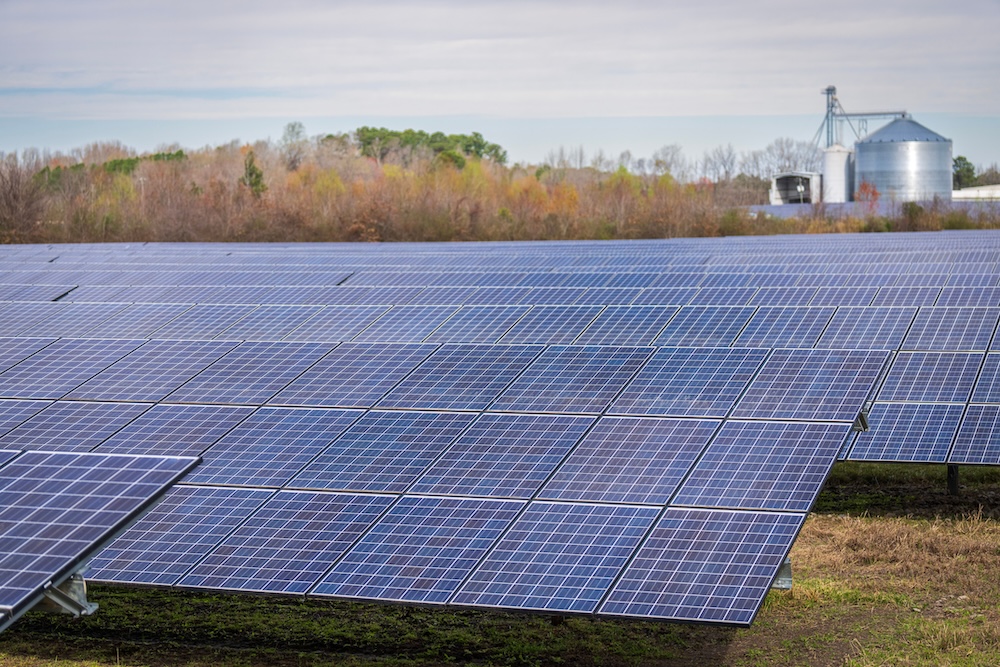
    The solar array near the village of L’Anse has 340 panels and a generating capacity of about 110 kilowatts. It produces power for about 50 households or organizations that signed up as subscribers.

    The results, laid out in a recent paper in the journal Energy Research & Social Science, demonstrate how this project—small by just about any standard—has succeeded in meeting its financial and social goals.

    Inside Climate News, May 2024, “Want to See Community Solar Done Right? A Project in Michigan’s Upper Peninsula Can Serve as a Model”

    The Power of Community Solar

    Community solar projects allow multiple households to share the benefits of a single solar array, rather than each home installing its own solar panels. This model is particularly advantageous for areas with lower population densities, like Michigan’s Upper Peninsula, where individual solar installations might not be economically feasible.

    Case Study: Upper Peninsula’s Solar Success

    The Upper Peninsula project has shown how effective community solar can be, even for small groups of participants. The project, supported by local government and private partners, aimed to provide clean, renewable energy to the residents of this remote region. Here’s how it works:

    1. Shared Solar Arrays: Instead of individual households bearing the high upfront costs of solar installation, a central solar array is set up. This array generates electricity that is then distributed among participating households.
    2. Economic Benefits: Each household buys into the project, either through an upfront investment or a monthly subscription. This investment is much lower than the cost of a private solar installation, making it accessible to more people. As a result, participants see reduced energy bills, sometimes saving up to 20% on their electricity costs.
    3. Environmental Impact: By participating in a community solar project, households collectively reduce their carbon footprint. This project alone is expected to cut down carbon emissions significantly, contributing to the state’s renewable energy goals.

    Benefits for Small Communities

    The advantages of community solar are manifold, especially for small communities:

    • Cost Savings: Even a small number of households can pool resources to benefit from economies of scale. Lower costs per household make solar energy accessible to more people.
    • Energy Independence: Small communities can reduce their reliance on external energy sources, gaining more control over their energy production and costs.
    • Community Engagement: These projects foster a sense of community as neighbors come together to invest in a shared resource. This collaboration can strengthen community ties and promote collective environmental responsibility.
    • Scalability: Community solar projects are highly scalable. They can start small, with just a handful of households, and expand as more participants join. This flexibility is ideal for rural and semi-rural areas.

    Looking Ahead

    Michigan’s Upper Peninsula is setting an example for other small communities across the country. As technology advances and the cost of solar installations continues to decrease, the model of community solar becomes even more attractive. Local governments and utility companies can play a crucial role in supporting these initiatives, offering incentives and removing regulatory barriers.

    Community solar projects represent a practical, effective way for small communities to embrace renewable energy, save on electricity costs, and reduce their environmental impact. As the success in Michigan’s Upper Peninsula shows, even small groups can make a big difference in the transition to clean energy.

    By harnessing the power of the sun together, small communities can shine brightly and lead the way to a sustainable future.


  • Could community solar help fund local public schools?

    Could community solar help fund local public schools?

    Public school enrollment is predicted to decline in most states, including Indiana, over the next decade. Many school districts also are facing a fiscal cliff caused by the coming end of pandemic-related federal funding.

    Long story short: Public schools may need more money.

    Could small, localized community solar projects be a potential budget solution? Check out what’s been going on the past couple years in Colorado:

    In 2022, Pivot Energy completed a total of seven community solar projects in Weld, Logan and Crowley counties. These projects, which have a cumulative generating capacity of 13 megawatts, signed up more than 1,700 households and businesses as subscribers. At the same time, the Weld RE-5J School District signed up as a subscriber, which is expected to save the district almost $400,000 in utility expenses over 20 years. In Weld County alone, these community solar projects are expected to generate $1.4 million in property taxes, most of which will go towards public education.

    TheFencePost.com, May 2024, “Community solar projects are surging as consumers seek more choice, competition on the power grid”

    To be clear, we don’t know what the local fiscal impact of community solar projects would be in Indiana because we don’t currently have a law in place that allows for them to be built, but it’s possible that independent community solar projects could play a pivotal role in local economies by enhancing the property tax base, thereby providing a much-needed financial boost to struggling public schools.

    As these projects are developed, they could also lead to significant capital investments in the local area. These investments not only increase the value of the properties where the solar installations are sited but also potentially uplift the surrounding properties due to the added infrastructure and economic activity.

    As property values rise, so does the property tax revenue, which is a crucial source of funding for local public schools. This infusion of funds can help schools address budget shortfalls, improve facilities, and enhance educational resources, directly benefiting students and the community at large.

  • What do dairy cows and community solar have in common?

    What do dairy cows and community solar have in common?

    Community solar is going to power six locally run dairy farms in Vermont thanks to two recently completed projects developed on underutilized land.

    The Vermont dairy industry itself generates over $2.2 billion annually, but increasingly thin margins are leading local farmers to seek out new ways to compete without losing use of any of their land. Community solar projects are a great solution.

    These community solar projects consist of two 500 kW (864 kWdc) ground-mount solar arrays on less productive land in Newbury and Jamaica, Vermont. The solar projects are designed to help reduce fixed energy costs so the farms can increase profit margins.

    Solar Builder Magazine, May 2024, “Community solar saving Vermont dairy farms”

    Community solar projects like this one have the potential to unite local communities through shared investment in clean energy infrastructure. By subscribing to a local solar farm, community members or local businesses can directly participate in the generation of renewable energy, reducing their reliance on fossil fuels and lowering electricity bills. This shared endeavor can foster a sense of collective responsibility and pride, encouraging collaboration and strengthening community bonds.

    Moreover, community solar projects offer a unique opportunity to repurpose underutilized land for the benefit of the community. Vacant lots, brownfields or even rooftops can be transformed into solar farms, generating clean energy and revenue for the local economy. This not only maximizes land use but also revitalizes neglected areas, contributing to the overall aesthetic and economic development of the community.

    Community solar projects also generate local jobs, from installation and maintenance to project management and education. This provides employment opportunities for residents and further stimulates the local economy. Additionally, the revenue generated from these projects can be invested in community initiatives, such as education programs, infrastructure improvements or social services, further benefiting the community as a whole.

  • A familiar refrain? States are getting funding for community solar—but they might not be able to use it.

    A familiar refrain? States are getting funding for community solar—but they might not be able to use it.

    Indiana isn’t alone facing hurdles potentially deploying millions of dollars in new federal funding aimed at helping low- and middle-income households access the benefits of solar energy.

    Wisconsin leaders are celebrating a $62 million grant from the Biden administration to help install solar power in homes and in community projects.

    But there’s a catch: Those types of solar projects in neighborhoods and on multi-family buildings can conflict with state law.

    It’s unclear at this point how state agencies and solar proponents will get around that complication. The question is expected to be answered in the coming months as stakeholders and the state finalize the grant planning. 

    The Cap Times, May 2024, “Wisconsin can pay for solar on thousands of homes, but faces hurdles”

    Wisconsin, like Indiana and more than 20 other states, has laws that make it difficult for residents to access independent or third-party community solar projects. These laws are often written in a way that benefits monopoly utilities, which can make it more expensive and time-consuming for residents to go solar.

    There are a number of reasons why states should change their laws to make it easier for residents to access independent or third-party community solar projects. First, community solar can help to reduce greenhouse gas emissions and air pollution. Second, it can create jobs and boost the economy. Third, it can help to lower electricity bills for residents.

    The goal of the federally funded Solar for All program is to make solar energy more accessible and affordable for all Americans, particularly those in disadvantaged communities, while also promoting environmental sustainability and economic development.

    In Indiana, there is a growing movement to change the state’s laws to make it easier for residents to access community solar. In 2022, the Indiana General Assembly passed a law that protects the property rights of Hoosiers who want to go solar. The law provides a clear path for homeowners in restrictive HOAs to get approval from their neighbors to install solar panels.

    However, there is still more that can be done to make community solar more accessible in Indiana. The state should pass a law that allows for the creation of independent community solar projects. This would allow residents to choose from a variety of solar providers and get the best possible price for solar energy.

    In addition, the state could provide incentives for community solar projects. This would help to make solar more affordable for residents and businesses.

    Finally, the state could educate residents about the benefits of community solar. This would help to raise awareness of the issue and encourage more people to support community solar.

    By taking these steps, Indiana can make it easier for residents to access community solar and reap the benefits of this clean energy source.

  • Stateline.org: “Can’t install your own solar panels? Some areas let you join a community project.”

    Stateline.org: “Can’t install your own solar panels? Some areas let you join a community project.”

    There’s no other way to say it: This recent article from Stateline.org is fantastic—and makes the clear case why we need independent community solar here in Indiana.

    This year, lawmakers in at least 10 states have put forward bills that would enable or expand community solar programs, driven in part by federal funding opportunities from the Inflation Reduction Act. Citing consumer choice and affordability, a growing number of Republican lawmakers have sponsored such proposals, including in seven of those states.

    But some bills have stalled amid strong opposition from utilities, which have argued that community solar programs don’t account for costs such as billing overhead and distribution fees, which are passed on to non-subscribing ratepayers.

    Stateline.org, May 2024, “Can’t install your own solar panels? Some areas let you join a community project.”

    There are lots of reasons why monopoly utilities don’t like independent community solar laws that put power directly in the hands of local communities.

    • Loss of Control and Profit: Monopoly utilities traditionally hold exclusive power over energy generation and distribution. Community solar disrupts this model, empowering individuals and communities to generate their own electricity. This decentralization reduces utilities’ control over the market and can lead to decreased profits.
    • Reduced Revenue: When homeowners and businesses install rooftop solar or subscribe to community solar projects, they purchase less electricity from the utility. This can directly impact the utility’s bottom line.
    • Perceived Threat to Reliability: Utilities sometimes express concerns that community solar projects could destabilize the grid. However, with proper planning and integration, these concerns can be addressed, and community solar can actually add to grid resilience.
    • Challenges to Existing Business Model: The traditional utility model is based on building large, centralized power plants. Community solar is a decentralized model, requiring utilities to adapt their business practices and infrastructure. This transition can be perceived as costly and complicated.

    “[Utilities] would rather have their monopoly on the grid, and they have their claws in the entire political ecosystem,” said Matt Hargarten, public affairs director with the Coalition for Community Solar.

    Stateline.org, May 2024, “Can’t install your own solar panels? Some areas let you join a community project.”

    In some cases, utilities will be supportive of community solar—but only if they’re in charge of it.

    But advocates say such utility-run programs aren’t truly community solar, as they fail to reach the scale and cost savings of those offered by third-party developers.

    “What’s important is creating a competitive market that allows for non-utility project developers,” said Maria McCoy, a researcher with the Institute for Local Self-Reliance, a nonprofit that seeks to empower local communities. “Subscribers should save money and not be paying a premium.”

    Stateline.org, May 2024, “Can’t install your own solar panels? Some areas let you join a community project.”

    Despite the clear advantages of community solar, Indiana currently lacks comprehensive legislation to enable and promote these programs. While some utilities may offer limited community solar options, these programs are often restricted and don’t meet the full potential of community solar.

    That’s why Indiana needs independent community solar. Our shared vision is a statewide policy that supports:

    • Community and other independent ownership of community solar
    • Tangible savings for subscribers
    • Competitive and transparent markets for community solar development
    • Equitable access to the benefits of community solar for all Hoosiers

    By enacting independent community solar legislation, Indiana can unlock the potential of this clean energy source and join other states that already are leading the way for their residents.

  • Columbus Republic: “Grant will energize an array of solar in Columbus”

    Columbus Republic: “Grant will energize an array of solar in Columbus”

    Indiana received welcome news on Earth Day this year that our state will soon receive more than $100 million in federal funding to help bring solar energy to low- and middle-income Hoosiers.

    This recent editorial in the Columbus Republic sums up why this funding is so important for the future of our state:

    Solar power has been a growing part of our energy mix in recent years because economically, it makes long-term sense and it’s environmentally sustainable. But because the upfront installation costs are high, solar has been out of reach for most households and cost-prohibitive for low-income households.

    But this grant, and the shovel-ready projects that local stakeholders have designed for Columbus, show that it doesn’t have to be that way.

    A few hundred low-income households in Columbus will get solar power as a result of this grant. But from an economic and sustainability standpoint, everyone in the city will benefit.

    Columbus Republic, May 2024, “Editorial: Grant will energize an array of solar in Columbus”

    The Indiana coalition was awarded funding for a solar energy program that is part of a national effort to ensure low-income families have access to solar energy. This program will benefit low-income families by reducing their energy bills and improving air quality. Community solar installations will also create local jobs as they are being built.

    Unfortunately, right now independent community solar developments are not allowed under Indiana law.

    In order to maximize the benefits of solar energy in Indiana, lawmakers can use this moment to change the law to allow independent community solar development across the state so Hoosiers who cannot install solar panels on their own roof can benefit from the clean energy and cost savings of solar.

    By allowing independent community solar development, Indiana can create more jobs, improve air quality and help more Hoosiers save money on their electric bills.

  • WRTV: “City of Indianapolis expanding access to solar energy through federal grants”

    WRTV: “City of Indianapolis expanding access to solar energy through federal grants”

    WRTV in Indianapolis recently ran a great story about how Indiana’s funding from the Solar for All program will be used by the city to build a community solar on the Southeast side:

    “The main idea of community solar is that it creates equitable access to solar projects,” Lindsay Trameri with the Indianapolis Office of Sustainability said. “The energy doesn’t have to be created in and produced on your property. A lot of people, for a variety of reasons, aren’t great candidates for roof top solar.”

    WRTV, April 2024, “City of Indianapolis expanding access to solar energy through federal grants”

    Community solar allows property owners who can’t install solar panels on their own roof to subscribe to a solar field and receive a discount on their energy bill. This is a great option for people who rent their homes or who don’t have a suitable that’s suitable for solar panels.

    The financial assistance program will help low- and middle-income Indianapolis residents overcome the upfront costs of installing solar panels on their homes. This will make solar energy more affordable for a wider range of people.

    These programs are funded by grants from the Inflation Reduction Act, a recently passed federal law that is making significant investments in clean energy. This is a sign of the growing momentum behind solar energy in the United States.

    Indianapolis’ solar expansion project is a great example of how cities can take advantage of federal funding to make solar energy more accessible to all residents. If other cities in Indiana follow suit, it could spark a community solar movement across the state.

    Here are some additional benefits of community solar:

    • Community solar can help to reduce greenhouse gas emissions and combat climate change.
    • Community solar can create jobs in the solar industry.
    • Community solar can help to improve air quality.

    By making solar energy more accessible to residents, we can create a cleaner, healthier, and more sustainable future for all.

  • Friday Flashback to Indiana Renewable Energy Day: Munster Environmental Club Advocates for Community Solar

    Friday Flashback to Indiana Renewable Energy Day: Munster Environmental Club Advocates for Community Solar

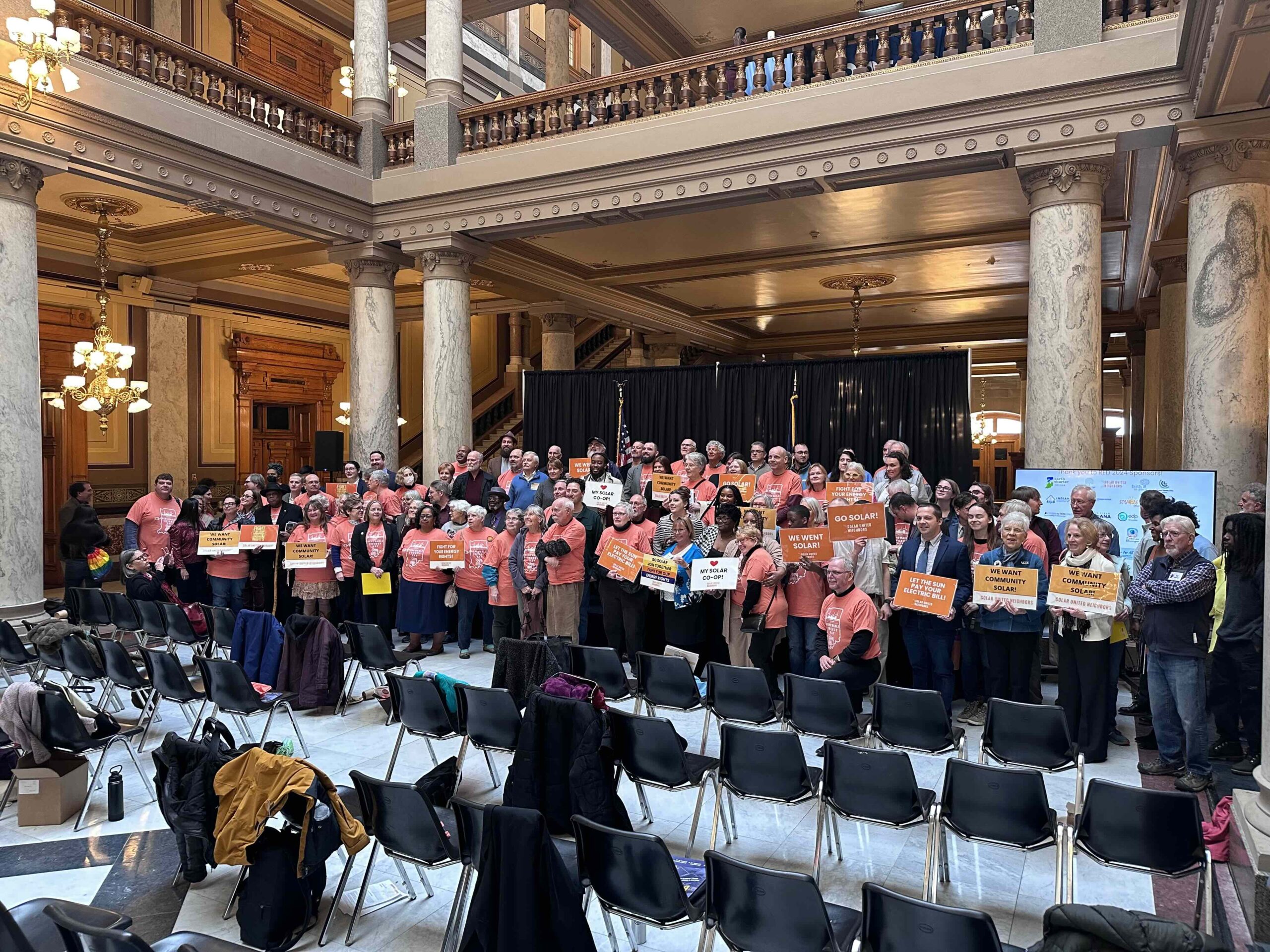
    Remember back in February when the Indiana Statehouse positively buzzed with energy – the renewable kind! Indiana’s Renewable Energy Day was in full swing, and the enthusiasm and determination of activists from across the state was infectious.

    A group of young people who made the trek from Northwest Indiana weren’t just there to check a box or participate in a school trip—they were there to make their voices heard on issues that are critical to their future.

    Champions of Independent Community Solar

    Student members of the Environmental Club from Munster High School showed up to express their support for independent community solar, the idea that individuals and communities should be able to invest in their own solar projects, breaking the monopoly stranglehold of large utility companies.

    They spoke with informed confidence, tackling a complex issue with ease. Legislators listened intently, recognizing the power of these young voices shaping not just a distant future, but the decisions of today.

    The Power of Youthful Activism

    There’s something undeniably powerful about seeing young people take the lead on issues like climate change and renewable energy. Their urgency injects a much-needed wake-up call, their voices carrying a moral clarity often missing in adult debate.

    Events like Renewable Energy Day at the Statehouse aren’t just about policy change. They’re about building a movement, inspiring the next generation of leaders, and creating a sense of hope that positive change is truly possible.

    If you missed Renewable Energy Day earlier this year, be sure to catch us at the Statehouse next year, when we hope Indiana lawmakers will take up and pass independent community solar so that all Hoosiers can enjoy the benefits of and savings from clean energy.

  • Solar for All? Federal Investment in Indiana Will Help Low-Income Hoosier Families

    Solar for All? Federal Investment in Indiana Will Help Low-Income Hoosier Families

    The White House and the EPA made a big splash on Earth Day with their announcement of $7 billion in funding to make sure solar energy is available to low-income families.

    The Solar for All funding is the jump-start we need to ensure equitable access to solar energy and to get the transition to clean energy moving quicker.

    Solar for All is ​“unprecedented,” said Warren Leon, executive director of the Clean Energy States Alliance. ​“There’s never been an initiative anywhere near as big for expanding solar for the benefit of low- and moderate-income households across the country. This is going to give a tremendous boost to an important share of the solar market that has not received sufficient attention in the past.”

    The 60 selected programs, administered by state agencies, municipalities, tribal governments, and nonprofits, will use grants and low-cost financing to develop community solar, rooftop solar, and battery storage for individual homes and multifamily affordable buildings.

    In some cases, the Solar for All grants will help grow existing programs, including large ones in California and New York, Leon said. But for 25 states and territories, this will be the first time they’re getting low-income solar programs, he noted. Among the newcomers — most of them Republican-leaning states — are Arkansas, Arizona, Idaho, Missouri, Nebraska, North Dakota, and South Dakota.

    Canary Media, April 2024, “Solar is about to get a lot more affordable for low-income households”

    Indiana is one of those states—and this funding could be a game-changer, both for traditional solar installations as well as independent community solar if the state’s laws are redesigned to allow for it.

    Traditionally, upfront costs have been a barrier for many Hoosiers to consider solar panels for their homes. This funding will help address that by creating new incentives, such as rebates or tax breaks, that can significantly reduce the financial burden.

    With a community solar law in place that allows independent, local projects to move forward, solar could truly become a reality for tens of thousands more Hoosiers. Community solar projects allow renters, those in multi-family homes and others who cannot put solar on their rooftops to benefit from solar energy by subscribing to a community solar farm and receiving credits on their electricity bills.

    Overall, this federal funding is a huge step forward in making solar energy a viable option for more Indiana residents. It will lower energy costs for low-income families, create jobs in the solar industry and move the state closer to its clean energy goals.

  • BREAKING: Feds Announce Solar For All Grants, Indiana Awarded $117 Million

    BREAKING: Feds Announce Solar For All Grants, Indiana Awarded $117 Million

    Big news for solar energy and community solar in Indiana: Today, the U.S. Environmental Protection Agency announced 60 grantees that will receive $7 billion in awards through the Solar for All grant competition to deliver residential solar projects to over 900,000 households nationwide. The grant competition is funded by the Inflation Reduction Act, which created EPA’s $27 billion Greenhouse Gas Reduction Fund.

    An application from the Indiana Community Action Association, Inc. (IN-CAA) was selected to receive more than $117 million in funding.

    “SFA Indiana (SFAI) is a coalition of municipal governments and community entities in Fort Wayne, Gary, Indianapolis, and Columbus, combined with six statewide organizations. The coalition will collectively solarize low-income homes while transforming the market in Indiana by creating new financial products and incentives that jumpstart solar for low-income residents, new affordable housing developments, and more. In dialogue with utility companies, and in tandem with school-to-work industry development efforts, the coalition is committed to leading toward solar in Indiana from the grassroots upward.”

    A screenshot image of the award amount for Indiana's Solar for All grant of more than $117 million.

    From the EPA press release:

    “Solar is the cheapest form of electricity—and one of the best ways to lower energy costs for American families,” said John Podesta, Senior Advisor to the President for International Climate Policy. “Today’s announcement of EPA’s Solar for All awards will mean that low-income communities, and not just well-off communities, will feel the cost-saving benefits of solar thanks to this investment.”

    “Residential solar electricity leads to reduced monthly utility bills, reduced levels of air pollution in neighborhoods, and ultimately healthier communities, but too often low-income and disadvantaged communities have been left out. Today’s announcement will invest billions to ensure that affordable housing across the U.S. can access solar and increase energy efficiency and climate resilience,” said U.S. Department of Housing and Urban Development (HUD) Acting Secretary Adrianne Todman. “HUD is honored to have played a key role in today’s monumental announcement, which will provide meaningful household savings to households in low-income and disadvantaged communities, reduce both greenhouse gas emissions and energy costs, and deliver electricity during grid outages for low-income households.”

    U.S. Environmental Protection Agency, April 2024, “Biden-Harris Administration Announces $7 Billion Solar for All Grants to Deliver Residential Solar, Saving Low-Income Americans $350 Million Annually and Advancing Environmental Justice Across America”

    With a community solar law in Indiana that would allow independent community solar projects, this funding could unlock clean energy for low- and middle-incoming communities across the state.

    Community solar would allow Hoosiers who can’t install panels on their roof, like renters or those with unsuitable roof space, to enjoy the perks of solar energy. By subscribing to a local solar farm, residents would receive credits on their electricity bills for their share of the power produced. This could translate to savings of 10-15% on their energy costs. Furthermore, community solar farms would bolster Indiana’s clean energy infrastructure, reducing reliance on fossil fuels and contributing to a healthier environment.

    Today’s announcement is an exciting reminder of the ongoing expansion of solar energy nationwide and here in Indiana—and the potential we have to bring clean energy to all Hoosiers.

  • Do You Live in Southwest Indiana? Join Community Solar Advocates on May 4 for the Evansville Solar Congress

    Do You Live in Southwest Indiana? Join Community Solar Advocates on May 4 for the Evansville Solar Congress

    With local utility rates soaring through the roof, solar energy enthusiasts, homeowners and community members are invited to attend the Evansville Solar Congress on May 4.

    The free event will focus on the current state and potential of solar energy in Southwest Indiana, providing valuable information about:

    • How clean energy can lower energy costs for homeowners, small businesses and community solar participants;
    • Incentives available for local solar installations;
    • The additional benefits of community solar for those who can’t install their own panels;
    • Current policy barriers and how to overcome them.

    Attendees will have the chance to network with fellow solar supporters, discover local involvement opportunities and take actionable steps to promote solar adoption in the region.

    Event Details:

    Evansville Solar Congress
    Saturday, May 4
    11:30 a.m. – 3 p.m. CDT
    Bethlehem United Church of Christ
    6400 Oak Hill Road 
    Evansville, IN 47725

    Cost: Free (food and refreshments provided)

    Registration: Evansville-SC.eventbrite.com

    promotional graphic for Evansville Solar Congress which will include community solar advocates gathering to discuss policy on May 4

    About Solar United Neighbors

    Solar United Neighbors is a nonprofit organization that works in Indiana and nationwide to represent the needs and interests of solar owners and supporters. SUN holds events and education programs to help people become informed solar consumers, maximize the value of their solar investment, and advocate for fair solar policies.

  • In Boston, a Vision for a Future Powered by the Sun and Owned by the Community

    In Boston, a Vision for a Future Powered by the Sun and Owned by the Community

    The Boston Community Solar Cooperative kicked off about 15 months ago in the wake of the passage of the Inflation Reduction Act, which provides a number of ways to embrace solar energy.

    Like us, they’re not just focused on community solar, but on local, independent ownership of community solar.

    From their website:

    Graphic from Boston Community Solar Cooperative website that says "Ownership matters. Energy resources are essential, and we believe they should be in the hands of the people who use them. We advocate for local cooperative ownership of solar installations, fostering a community that exercises control over its energy sources and reaps the rewards."

    The group’s founder recently sat down for a Q&A about their plan to place a solar project on the roof of the Dorchester Food Co-op and to launch a community-owned solar cooperative.

    Community solar, as a concept, has been around for probably a little over 15 years. The idea behind community-owned solar was that many households or renters may not have locations that are suitable for installing a solar array on a rooftop, so community solar was born out of the idea that we could have a solar system somewhere on the grid, and people who use [its] power somewhere else on the grid.

    At the Boston Community Solar Cooperative, we are creating what we refer to as a “community solar 2.0 model.” This is a model where, in addition to trying to provide the environmental benefit of clean energy — meaning lower costs, no fossil fuel use to generate power — we’re also trying to help communities with the wealth gap by having members of communities actually own the solar arrays that are used to generate power.

    WGBH, April 2024, “A Boston nonprofit is bringing community-owned solar power — and profit — to low-income neighborhoods”

    In urban landscapes like Boston across the nation, nonprofit organizations are pioneering community-owned solar power projects aimed at bringing renewable energy—and its economic benefits—directly to low-income neighborhoods.

    These projects typically involve local residents in the planning and implementation stages, ensuring that the community not only benefits from reduced energy costs but also receives a share of the profits generated. This model not only promotes environmental sustainability but also economic empowerment by creating jobs and providing training opportunities in the burgeoning green tech sector.

    These kind of initiatives often rely on government grants, private donations and innovative financing models to overcome the initial cost barriers associated with solar installations. Once operational, these solar arrays can significantly reduce energy bills for community members and generate revenue from excess power sold back to the grid.

    The success of these projects hinges on community engagement. Educational workshops and meetings help demystify the technology and the economics of solar power, fostering a sense of ownership and pride among participants. Moreover, these projects serve as tangible demonstrations of the feasibility and benefits of renewable energy, inspiring other communities to pursue similar initiatives.

    As more cities recognize the potential of community-owned solar power, this model could serve as a blueprint for sustainable development, particularly in underserved areas. By investing in renewable energy, we’re not only protecting the environment but also ensuring that its benefits reach all segments of society, paving the way for a brighter, more equitable future.

  • Half a Billion Dollars to Build Community Solar?

    Half a Billion Dollars to Build Community Solar?

    When it comes to good news for community solar developments across the country, the stories don’t get get much better than this:

    Nexamp, a community solar developer and project owner, has secured a whopping $520 million to install solar arrays around the nation in one of the largest capital raises to date for this growing sector.

    Community solar gives renters, small businesses and organizations the chance to benefit from local solar power even if they can’t put panels on their own roofs. The approach has helped households across more than 20 states access solar that they wouldn’t otherwise have been able to. The Department of Energy aims for 5 million households around the country to sign up for community solar by next year.

    Policies differ state-by-state, but typically, community solar subscribers pay a monthly charge and then receive a credit on their utility bills for the power generated by their fraction of a solar array. This credit is usually larger than the fee they pay. In many states, community solar has gained bipartisan support because of its benefits to low-income households now burdened by disproportionate energy bills.

    Canary Media, April 2024, “Nexamp nabs $520M to build community solar across the US”

    Community solar projects are important to the equitable and inclusive future of clean energy because they allow participants to benefit from solar power without needing to install panels on their own property. Instead, they can subscribe to a share of a larger solar project located offsite.

    This arrangement is particularly beneficial in states with supportive community solar legislation, as these laws typically include mechanisms for billing and crediting participants for the energy produced, making solar more accessible and financially viable for a wider audience.

    Because Indiana does not have a law allowing independent community solar, we risk losing clean energy jobs and economic investment, and our state will not be able to fully harness the power of the sun as quickly as states that have embraced community solar for all.

    Click here to learn more about community solar and send a message to Hoosier lawmakers that you’d like them to consider independent community solar legislation in Indiana.

  • New Virginia Community Solar Law Reflects Compromise and Makes Incremental Progress

    New Virginia Community Solar Law Reflects Compromise and Makes Incremental Progress

    Last week, Virginia Gov. Glenn Youngkin signed a bill designed to improve and expand shared solar access in Dominion Energy territories and create a shared solar program for customers in southwest Virginia.

    The Virginia legislation will enable up to 150 MW to be added to Dominion Energy’s shared solar program, allowing certain projects located on rooftops, brownfields, landfills, or dual-use agricultural facilities to be eligible for incentives determined by the Virginia Department of Energy. It will also create a shared solar program of 50 MW for Appalachian Power Company.

    The Coalition for Community Solar Access was hoping that the bills would allow 2 GW of community solar between the two  utilities, but instead it is just 200 MW. However, while these bills are not as ambitious as hoped by community solar proponents, they represent a bipartisan compromise and will help to launch shared solar in this southern state. Both bills require that utilities consider the benefits of shared solar to the electric grid and to the State when calculating the minimum bill for customers.

    PV Magazine, April 2024, “Virginia governor signs legislation establishing community solar”

    Bringing more clean energy into the mix is a good thing, but Hoosiers for Community Solar hopes Indiana will go beyond utility-owned community solar to ensure everyone can harness the power of the sun.

    Utility-owned community solar projects offer a straightforward path for consumers to access renewable energy, often facilitated by their existing relationship with their utility provider. These projects can provide a sense of reliability and simplicity, as they are managed by established entities. However, the true potential of community solar lies in projects that are independently owned and operated.

    Independent community solar represents the gold standard for consumer benefits for several reasons. First, it fosters a competitive market, leading to more favorable pricing and innovative service offerings for consumers. Without the monopoly influence of a single utility provider, independent projects must vie for consumer attention, which can result in better deals for customers.

    Moreover, independent community solar projects are typically more aligned with community interests. They can be more responsive to local needs and support local hiring within the community, and they often have a stronger commitment to environmental stewardship. This local focus not only benefits the community directly but also increases the overall sustainability impact of the solar project.

    Finally, the flexibility of independent projects allows for more consumer choice in terms of subscription models, contract lengths and the specific environmental benefits provided. Consumers can choose projects that match their values, whether that’s supporting local job creation, maximizing environmental impact or prioritizing cost savings. This level of choice and personalization is something that utility-owned projects, which often adopt a one-size-fits-all approach, can rarely match.

    As we look toward the future in Indiana, utility-owned community solar projects can be a step in the right direction, but independent community solar offers a richer set of benefits that align more closely with Hoosiers’ interests and the broader goal of empowering more people to be part of the renewable energy movement.

  • Can Indiana Do Better Than 33rd Place in New Wallethub “Green” State Ranking?

    Can Indiana Do Better Than 33rd Place in New Wallethub “Green” State Ranking?

    According to a new Wallethub study, Indiana ranks as one of the least “green” states in the nation.

    The study was based on 25 metrics including air quality, energy efficiency, green buildings per capita, and gasoline consumption. Indiana was ranked 33rd out of the 50 states in the study.

    In environmental quality, Indiana was ranked 8th. The state was also tied for second in air quality with Wyoming. Indiana was also ranked 39th in eco-friendly behaviors and 41st in climate change contributions.

    WIBC, April 2024, “Wallethub: Indiana is One of the Least “Green” States in the U.S.”

    To elevate our green ranking, Indiana could embrace statewide, independent community solar policy. Community solar allows residents to benefit from solar energy without having to install panels on their property, ideal for those who rent, live in apartments or have shaded rooftops. Indiana’s push towards community solar could significantly improve its standings in eco-friendly behaviors and energy efficiency, two areas where the state currently lags.

    By investing in community solar, Indiana could lower energy costs for its residents, reduce reliance on fossil fuels and improve air quality. These projects could also stimulate the local economy by creating jobs and encouraging technological innovation. As community solar projects become more widespread, they could serve as a tangible demonstration of Indiana’s commitment to sustainability and environmental stewardship.

    Moreover, community solar projects can enhance community resilience against power outages and reduce the state’s carbon footprint, addressing the climate change contributions metric where Indiana currently ranks poorly. By focusing on community solar, Indiana can not only climb the ranks of the greenest states but also set a precedent for sustainable living for other states in the Midwest to follow.