Tag: legislature

  • Lower Bills + Local Jobs: What Indiana Can Learn From Illinois’ Community Solar Success

    Lower Bills + Local Jobs: What Indiana Can Learn From Illinois’ Community Solar Success

    When we talk about renewable energy, one question comes up time and again: How can all families—especially renters, seniors, and working-class households—find a way to participate and save money?

    Right across our state border in Illinois, a case study published by The Pew Charitable Trusts offers an answer. Highlighting a 2-megawatt community solar project in suburban Chicago, Pew’s research demonstrates how state-supported community solar policy can deliver guaranteed savings directly to residents who can’t put panels on their own roofs.

    The case study explains how community solar opens up clean energy benefits to customers often left out of the market:

    “The flyer introduced Dianne to community solar, a type of distributed energy resource that allows consumers to benefit from solar energy without installing panels on their roofs. For renters or households unable to afford upfront installation costs, community solar opens access to energy savings that otherwise would be out of reach. Amid rising energy costs across the country, this approach not only supports cleaner energy but provides a pathway to more affordable bills.”

    The real-world impact for local residents on fixed or modest incomes is immediate and measurable:

    “Because the Torrence project predominantly serves communities with low-to-moderate household incomes, it plays an important role in addressing energy burden, a metric that defines the percentage of income a household spends on electricity bills. On average, low-income households have an energy burden of 6%, which is three times higher than that of other households… Through discounted electricity rates, subscribers receive guaranteed savings on their energy bills. During its first year of operation… the Torrence project delivered an estimated $186,000 in total customer savings.”

    Furthermore, the case study shows that community solar isn’t just about reducing utility bills. It’s also an economic engine for the broader community, supporting local agriculture through dual-use practices like solar grazing and creating local construction and maintenance jobs:

    “Development and construction activities—including more than $3.5 million in local and regional supplier spending and the generation of more than $1 million over the next 20 years from property taxes and lease payments—have further supported the local economy.”

    As Illinois demonstrates, when policymakers establish frameworks that allow community solar to thrive, everybody wins: ratepayers save money, local governments gain tax revenue and agricultural families gain new income streams.

    As utility bills continue to climb and expensive fossil fuels continue to present health risks, we’re hopeful that Indiana will embrace policies that give Hoosier families these same choices.
  • Indiana’s Rooftop Goldmine: Why Net Metering and Community Solar Are Key to a Reliable Energy Future

    Indiana’s Rooftop Goldmine: Why Net Metering and Community Solar Are Key to a Reliable Energy Future

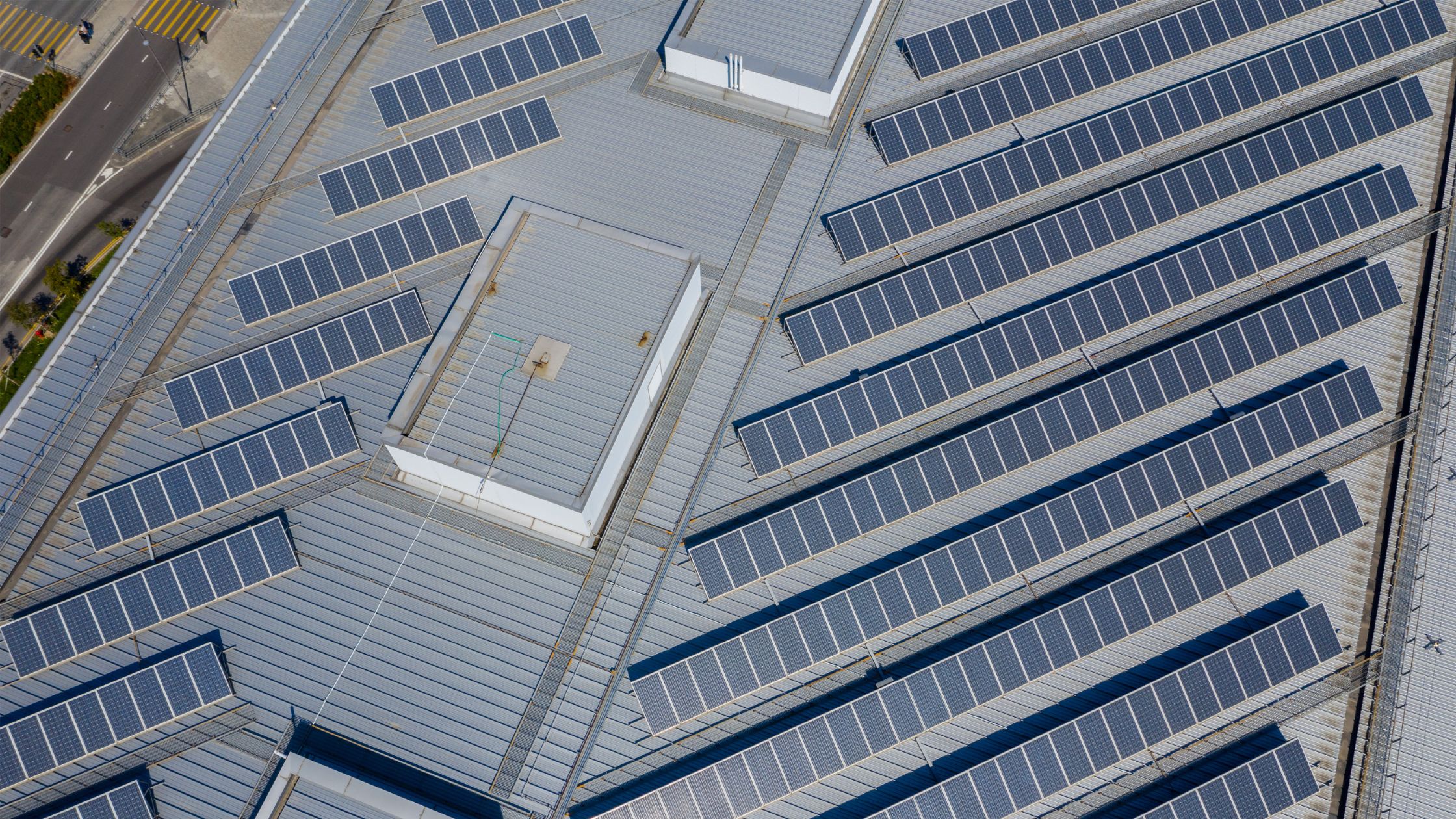
    Indiana is full of wide-open, flat rooftops—on big-box stores, distribution centers, and warehouses—just waiting to be put to use. According to a recent Indiana Public Media story, these commercial rooftops represent an underutilized opportunity for solar development in our state. With high visibility, proximity to population centers and existing grid connections, they’re a natural fit for helping Indiana build a more resilient, reliable and local clean energy supply.

    But if Indiana doesn’t get serious about fixing our outdated solar policies, that potential could go to waste—and Hoosiers will miss out on the savings and sustainability benefits solar power offers.

    Net Metering Was the Foundation for Solar Growth

    For years, net metering was one of the most effective tools for encouraging solar adoption. It allowed homeowners and businesses with rooftop solar to earn full retail credit for the excess energy they sent back to the grid. This made investing in solar financially viable for more people and helped Indiana build a more diverse and distributed energy system.

    But in 2017, Indiana began phasing out net metering. The policy was replaced with the Excess Distributed Generation (EDG) rate, which compensates solar customers at a much lower rate than the value of the electricity they produce. For many, this made rooftop solar a far less attractive investment.

    Restoring net metering, or at least creating a more equitable replacement, is essential if we want to see solar take off again, especially on those massive commercial rooftops that dot our landscape. When businesses know they’ll be fairly compensated for the clean energy they generate, they’re more likely to invest. That means more local power, more jobs and more savings on electricity bills.

    Community Solar Brings Clean Energy to Everyone

    Even with stronger net metering, rooftop solar won’t work for everyone. Many Hoosiers—especially renters, those with shaded roofs or households with limited income—simply can’t install solar panels at home. That’s where community solar comes in.

    Community solar projects allow individuals and small businesses to subscribe to a shared solar installation—often located on landfills, open fields or even those big-box rooftops—and receive a credit on their monthly electric bill for the energy it produces. It’s a simple, scalable way to expand access to clean energy to people who have been left out of the rooftop solar boom.

    Unfortunately, Indiana still lacks a statewide framework for independent community solar. That means utilities can block these projects,or make participation so complicated that they never get off the ground. A strong community solar policy—like the ones proposed earlier this year in the General Assembly—would change that by requiring utilities to connect community solar installations to the grid and to provide fair compensation to participants.

    Big Rooftops, Bigger Opportunity—If We Take Action to Improve Our Energy Policy

    From an economic standpoint, enabling solar installations on commercial rooftops just makes sense. These large, sunny surfaces are typically close to where the electricity is needed, reducing transmission costs and improving grid reliability. Solar also creates good-paying jobs and helps protect Indiana families and businesses from volatile fossil fuel prices.

    But without policy changes—like restoring net metering and enabling independent community solar—we risk squandering this opportunity.

    Now is the time to act. With utility bills rising and public health worsening, Indiana can’t afford to wait. By making smart policy choices today, we can unlock a clean energy future that works for everyone—not just those with the right roof.

    Tell Indiana lawmakers to support fair solar compensation and pass community solar legislation in the next legislative session so we can power a brighter, more affordable energy future for all Hoosiers.

  • A familiar refrain? States are getting funding for community solar—but they might not be able to use it.

    A familiar refrain? States are getting funding for community solar—but they might not be able to use it.

    Indiana isn’t alone facing hurdles potentially deploying millions of dollars in new federal funding aimed at helping low- and middle-income households access the benefits of solar energy.

    Wisconsin leaders are celebrating a $62 million grant from the Biden administration to help install solar power in homes and in community projects.

    But there’s a catch: Those types of solar projects in neighborhoods and on multi-family buildings can conflict with state law.

    It’s unclear at this point how state agencies and solar proponents will get around that complication. The question is expected to be answered in the coming months as stakeholders and the state finalize the grant planning. 

    The Cap Times, May 2024, “Wisconsin can pay for solar on thousands of homes, but faces hurdles”

    Wisconsin, like Indiana and more than 20 other states, has laws that make it difficult for residents to access independent or third-party community solar projects. These laws are often written in a way that benefits monopoly utilities, which can make it more expensive and time-consuming for residents to go solar.

    There are a number of reasons why states should change their laws to make it easier for residents to access independent or third-party community solar projects. First, community solar can help to reduce greenhouse gas emissions and air pollution. Second, it can create jobs and boost the economy. Third, it can help to lower electricity bills for residents.

    The goal of the federally funded Solar for All program is to make solar energy more accessible and affordable for all Americans, particularly those in disadvantaged communities, while also promoting environmental sustainability and economic development.

    In Indiana, there is a growing movement to change the state’s laws to make it easier for residents to access community solar. In 2022, the Indiana General Assembly passed a law that protects the property rights of Hoosiers who want to go solar. The law provides a clear path for homeowners in restrictive HOAs to get approval from their neighbors to install solar panels.

    However, there is still more that can be done to make community solar more accessible in Indiana. The state should pass a law that allows for the creation of independent community solar projects. This would allow residents to choose from a variety of solar providers and get the best possible price for solar energy.

    In addition, the state could provide incentives for community solar projects. This would help to make solar more affordable for residents and businesses.

    Finally, the state could educate residents about the benefits of community solar. This would help to raise awareness of the issue and encourage more people to support community solar.

    By taking these steps, Indiana can make it easier for residents to access community solar and reap the benefits of this clean energy source.

  • Stateline.org: “Can’t install your own solar panels? Some areas let you join a community project.”

    Stateline.org: “Can’t install your own solar panels? Some areas let you join a community project.”

    There’s no other way to say it: This recent article from Stateline.org is fantastic—and makes the clear case why we need independent community solar here in Indiana.

    This year, lawmakers in at least 10 states have put forward bills that would enable or expand community solar programs, driven in part by federal funding opportunities from the Inflation Reduction Act. Citing consumer choice and affordability, a growing number of Republican lawmakers have sponsored such proposals, including in seven of those states.

    But some bills have stalled amid strong opposition from utilities, which have argued that community solar programs don’t account for costs such as billing overhead and distribution fees, which are passed on to non-subscribing ratepayers.

    Stateline.org, May 2024, “Can’t install your own solar panels? Some areas let you join a community project.”

    There are lots of reasons why monopoly utilities don’t like independent community solar laws that put power directly in the hands of local communities.

    • Loss of Control and Profit: Monopoly utilities traditionally hold exclusive power over energy generation and distribution. Community solar disrupts this model, empowering individuals and communities to generate their own electricity. This decentralization reduces utilities’ control over the market and can lead to decreased profits.
    • Reduced Revenue: When homeowners and businesses install rooftop solar or subscribe to community solar projects, they purchase less electricity from the utility. This can directly impact the utility’s bottom line.
    • Perceived Threat to Reliability: Utilities sometimes express concerns that community solar projects could destabilize the grid. However, with proper planning and integration, these concerns can be addressed, and community solar can actually add to grid resilience.
    • Challenges to Existing Business Model: The traditional utility model is based on building large, centralized power plants. Community solar is a decentralized model, requiring utilities to adapt their business practices and infrastructure. This transition can be perceived as costly and complicated.

    “[Utilities] would rather have their monopoly on the grid, and they have their claws in the entire political ecosystem,” said Matt Hargarten, public affairs director with the Coalition for Community Solar.

    Stateline.org, May 2024, “Can’t install your own solar panels? Some areas let you join a community project.”

    In some cases, utilities will be supportive of community solar—but only if they’re in charge of it.

    But advocates say such utility-run programs aren’t truly community solar, as they fail to reach the scale and cost savings of those offered by third-party developers.

    “What’s important is creating a competitive market that allows for non-utility project developers,” said Maria McCoy, a researcher with the Institute for Local Self-Reliance, a nonprofit that seeks to empower local communities. “Subscribers should save money and not be paying a premium.”

    Stateline.org, May 2024, “Can’t install your own solar panels? Some areas let you join a community project.”

    Despite the clear advantages of community solar, Indiana currently lacks comprehensive legislation to enable and promote these programs. While some utilities may offer limited community solar options, these programs are often restricted and don’t meet the full potential of community solar.

    That’s why Indiana needs independent community solar. Our shared vision is a statewide policy that supports:

    • Community and other independent ownership of community solar
    • Tangible savings for subscribers
    • Competitive and transparent markets for community solar development
    • Equitable access to the benefits of community solar for all Hoosiers

    By enacting independent community solar legislation, Indiana can unlock the potential of this clean energy source and join other states that already are leading the way for their residents.

  • Utility Dive: “Utilities must come clean about the full value of community solar”

    Utility Dive: “Utilities must come clean about the full value of community solar”

    Independent community solar policy that creates competitive and transparent markets for development often draws pushback from monopoly-owned utilities.

    Jeff Cramer, CEO of Coalition for Community Solar Access, and John Farrell, co-director of the Institute for Local Self Reliance, recently wrote an incredible opinion piece for Utility Dive making it clear why utilities are in opposition—and why they often misrepresent the truth.

    It’s really rather simple: utilities often oppose customer-driven, third-party owned energy projects like community solar because they threaten to supplant utility investments and shareholder profits. They use “cost-shift” — the idea that when one ratepayer benefits, the others bear the cost — as their bogeyman. And because utility ratemaking happens in a black box, it’s hard for legislators to argue against it.

    Community solar provides every household and business the opportunity to subscribe to solar energy without needing to install a system on site. The projects are typically 5 MW and below, serving up to 1,000 households, and a great way to bring bill savings to those who historically haven’t had access to clean energy. Leveraging millions in capital from individuals, businesses and entrepreneurs, community solar means accelerating an all-of-the-above approach to clean energy deployment.

    But if we’re going to harness the benefits of community solar, we need the utilities to stop spreading misinformation about costs and come clean about the value these projects bring to the grid.

    The truth is that research and numerous cost-benefit analyses show that investing in smaller projects built on the distribution network — like community and rooftop solar — bring unique benefits to all ratepayers on the grid. And when those benefits are properly accounted for, the costs for electric customers are virtually identical to utility-scale projects.

    Utility Dive, March 2024

    The question facing Hoosiers: Do we want a future defined by innovation, customer choice and healthier energy sources? Or will we cling to outdated monopolies that stifle progress and keep us in the dark ages of electricity?

    We are at a crossroads when it comes to how we power our lives and homes, and community solar presents a massive opportunity.

    Imagine a grid that’s smarter, cleaner, and puts more control in our hands. We can break free from the monopolies and build a system that lowers our bills, creates healthy competition and drives cutting-edge solutions that leave fossil fuels behind.

    The power to shift our outdated grid could be in our hands, but only if we break through the misleading utility rhetoric and show how community solar can work for all Hoosiers.

  • Shine Bright in Indiana: The Power of Community Solar

    Shine Bright in Indiana: The Power of Community Solar

    Hoosiers across Indiana are seeking ways to save money on electricity and embrace clean energy. Community solar offers a revolutionary solution, allowing everyone to benefit from solar power, even if you can’t install panels on your own roof.

    How Indiana’s Community Solar Works (or Why It Doesn’t… Yet)

    Here’s a breakdown of community solar and its current status in Indiana:

    • National Landscape: Across the country, community solar allows individuals, businesses, and organizations to subscribe to a portion of a shared solar array, receiving bill credits based on their share of energy produced.
    • Indiana’s Situation: Unfortunately, Indiana has not yet legalized independent community solar programs. However, there are efforts underway to change this!

    The Potential Benefits of Community Solar in Indiana

    Even though Indiana doesn’t have independent community solar programs yet, here’s what Hoosiers can look forward to:

    • Cost Savings: Subscribers can save on their electricity bills, often 10-15%.
    • Accessibility: Renters, those with unsuitable roofs, or anyone who can’t afford a personal solar system can access solar benefits.
    • Environmental Impact: Supports clean energy generation and reduces reliance on fossil fuels.
    • Grid Resilience: Boosts local power grids, making them more reliable.
    • Community Investment: Community solar projects can bring economic development and jobs to local areas.

    How Hoosiers Can Get Involved in Bringing Community Solar to Indiana

    Here’s what you can do to advocate for community solar in Indiana:

    1. Stay Informed: Follow organizations like Hoosiers for Community Solar to stay updated on advocacy efforts.
    2. Contact Representatives: Voice your support for community solar to your state legislators.
    3. Spread Awareness: Talk to friends, family, and neighbors about the benefits of community solar and share resources on social media.

    Conclusion

    While Indiana hasn’t legalized independent community solar yet, there’s a bright future ahead. By staying informed and getting involved, Hoosiers can pave the way for a more sustainable and affordable energy future with community solar.

  • Virginia Mercury: “Bills could expand shared solar programs in Dominion, Appalachian Power territories”

    Virginia Mercury: “Bills could expand shared solar programs in Dominion, Appalachian Power territories”

    A recent story out of Virginia could give hope to Hoosier advocates that community solar is within reach:

    Two bills that would expand the public’s access to shared solar in Virginia are awaiting a signature from Republican Gov. Glenn Youngkin.

    Shared solar is a program in which solar developers allow people who may be unable to install solar panels on their property to pay a subscription fee to receive energy from their facility. The facilities must generate no more than five megawatts.

    The program was created for Dominion Energy customers in 2022 to give property owners whose roofs are unsuitable to hold panels, or who reside on lots that don’t garner enough sunlight to produce electricity, the option of using renewable energy.

    But the program was limited to just 150 megawatts of electricity and required a minimum bill charge to cover the costs for distribution and transmission services; low-income subscribers were exempt from paying.

    As a result, two years since the program was created, only low-income subscribers have signed up for the program.

    Virginia Mercury, March 25, 2024

    These bills, aimed at removing regulatory barriers and incentivizing the development of shared solar projects in Dominion and Appalachian Power territories, signify a positive step towards a more equitable and renewable energy future. By facilitating the growth of community solar, policymakers can accelerate the transition to clean energy while ensuring that no community is left behind.

    Community solar could bring enormous benefits to Indiana if lawmakers can agree on a statewide policy:

    1. Access: One of the most significant advantages of community solar is its inclusivity. By eliminating the need for rooftop installations, community solar opens up renewable energy access to renters, homeowners with shaded roofs and those unable to afford upfront installation costs.
    2. Cost Savings: Participants in community solar programs typically benefit from reduced electricity costs. As subscribers receive credits on their utility bills for their share of the solar production, they can lower their overall energy expenses while supporting clean energy generation.
    3. Environmental Impact: Community solar contributes to reducing greenhouse gas emissions and dependence on fossil fuels. By harnessing the power of the sun, these programs promote sustainable energy practices and help combat climate change.
    4. Community Engagement: Beyond environmental benefits, community solar fosters a sense of community involvement and cooperation. Local residents and businesses can come together to invest in renewable energy infrastructure, strengthening community bonds and promoting a shared commitment to sustainability.

    Hoosier homes and businesses, including low-income families and underserved populations, need new options to expand access to the benefits that solar energy provides.

  • CNET Highlights Some of the Best Solar Panel Installation Companies in Indiana

    CNET Highlights Some of the Best Solar Panel Installation Companies in Indiana

    The burgeoning community solar industry is proving to be a double win for many regions. Not only does it expand access to clean energy for residents who may not be able to install rooftop panels themselves, but it’s also creating a wave of new job opportunities.

    These solar jobs often pay a prevailing wage and can include construction, engineering, sales and marketing, offering a chance for local residents to build fulfilling careers while contributing to a sustainable future for their communities.

    As community solar projects take root across the country, they’re injecting fresh resources into local economies. The increased demand for skilled labor to develop, install and maintain these solar arrays can translate into a boon for employment rates.

    CNET, which publishes reviews, news, articles, blogs, podcasts and videos about technology and consumer electronics globally, recently profiled some of the best Indiana solar installation companies:

    Learn more about how solar energy and community solar can help Indiana build its clean energy economy.

  • The Inflation Reduction Act and Solar Energy: How Solar for All Could Expand Renewable Energy in Indiana

    The Inflation Reduction Act and Solar Energy: How Solar for All Could Expand Renewable Energy in Indiana

    As Hoosiers continue to struggle with poor air quality, polluted waterways and soaring utility rates, the transition to renewable energy sources is crucial.

    Indiana, with its abundant sunshine, holds immense potential for solar energy production. The Environmental Protection Agency’s (EPA) Solar for All program is could be a significant step in this direction, aiming to empower low-income communities and bridge the gap in clean energy access.

    What is the Solar for All Program?

    The Solar for All program is a grant initiative established by the EPA to support states, territories, tribes, cities and non-profit organizations in their endeavors to increase solar energy use in low-income communities.

    The program aims to make solar energy more accessible and affordable, fostering a more equitable renewable energy landscape.

    Why is Expanding Solar Energy Important in Indiana?

    Despite recent low rankings, Indiana has plenty of sunlight, which continues to make it a prime candidate for solar energy development. Expanding solar energy in the state offers a multitude of benefits:

    • Environmental Protection: Solar energy is a clean and renewable resource, unlike traditional fossil fuels that contribute to greenhouse gas emissions and air pollution. By embracing solar energy, Indiana can significantly reduce its carbon footprint and the effects of climate change.
    • Economic Growth: The solar energy industry is a burgeoning sector with the potential to create new jobs and stimulate economic growth in Indiana. Investing in solar energy infrastructure can attract businesses and create employment opportunities, particularly in the installation, maintenance and manufacturing sectors.
    • Energy Independence: As Indiana increases its reliance on solar energy, it reduces its dependence on fossil fuels and mitigates the impact of fluctuating prices. This fosters energy independence and bolsters the state’s energy security.
    • Community Benefits: The Solar for All program specifically targets low-income communities, ensuring they are not left behind in the clean energy transition. By providing financial assistance for solar panel installation, the program empowers these communities to reduce their energy bills and participate in the green energy revolution.

    The Inflation Reduction Act and its Impact on Solar Energy

    The recently passed Inflation Reduction Act includes significant provisions to incentivize solar energy adoption across the United States.

    These incentives, including tax credits and rebates, are expected to further accelerate the growth of the solar industry and make solar energy even more affordable for individuals and communities.

    The Solar for All program, coupled with the supportive measures outlined in the Inflation Reduction Act, presents an incredible opportunity for Indiana to harness its solar potential.

    By embracing solar energy, Indiana can create a cleaner, more sustainable future, stimulate economic growth and ensure equitable access to clean energy for all its residents.

  • IndyStar: “Indiana ranked worst state for rooftop solar. Here’s why fewer Hoosiers have it.”

    IndyStar: “Indiana ranked worst state for rooftop solar. Here’s why fewer Hoosiers have it.”

    The Indianapolis Star recently reported on a new Consumer Affairs rating that ranks the Hoosier State dead last for rooftop solar:

    Indiana’s legislators began phasing out this incentive in 2017, and the benefits of net metering for new solar installations ultimately expired in 2022.

    Net metering’s incentives were replaced with a system that pays homeowners much less for that excess power they generate from the rooftop or residential solar installation. The erosion of these economic incentives by Indiana’s lawmakers has resulted in a reduction in rooftop solar installations.

    Indianapolis Star, Feb. 26, 2024

    Are there other ways Hoosiers might be able to access solar energy? It’s possible, thanks to a $7 billion federal effort that’s part of the Inflation Reduction Act.

    How Solar for All Can Help States Leverage Community Solar to Expand Clean Energy

    The Environmental Protection Agency (EPA) is awarding grants through a program called Solar for All to states, territories and other organizations to increase access to solar energy for low-income communities. The program aims to install solar panels on millions of low-income homes.

    Community solar is a solar energy generation model in which a group of people share the benefits of a solar installation. This can be a great way for low-income residents to participate in the solar energy market, as they may not be able to afford to install solar panels on their own homes or may be renting the homes they live in.

    Through this competition, Solar for All will award up to 60 grants to states, territories, Tribal governments, municipalities, and nonprofits to expand the number of low-income and disadvantaged communities primed for residential solar investment—enabling millions of low-income households to access affordable, resilient, and clean solar energy.

    U.S. Environmental Protection Agency, Feb. 7, 2024

    Solar for All grants could potentially be used to support a variety of community solar projects, including:

    • Installing solar panels on affordable housing developments
    • Building community solar farms that serve low-income residents
    • Developing solar energy programs for low-income communities

    By leveraging community solar, states could use Solar for All grants to expand clean energy access and reduce greenhouse gas emissions.

    Benefits of Solar for All

    Solar for All offers a number of benefits, including:

    • Increased access to clean energy for low-income communities
    • Reduced greenhouse gas emissions
    • Job creation in the clean energy sector
    • Economic development in low-income communities
  • Indiana Lags Behind in Solar Power: How Community Solar Can Help Us Shine Brighter

    Indiana Lags Behind in Solar Power: How Community Solar Can Help Us Shine Brighter

    Indiana has been ranked as the least solar-friendly state in the nation, according to a new study by Consumer Affairs. This is due to a number of factors, including a lack of net metering policies, high upfront costs for solar panels and limited access to financing.

    However, for Hoosiers hoping our state can adopt more clean energy and move toward a renewable future, there could a glimmer of hope on the horizon: community solar.

    Community solar allows residents to subscribe to a local solar farm and receive bill credits for their share of the clean energy produced. This can make solar energy more affordable and accessible for everyone, regardless of their income or homeownership status.

    Here are some of the benefits of community solar:

    • Affordability: Community solar eliminates the upfront costs of installing solar panels, making it more affordable for everyone.
    • Accessibility: Community solar makes solar energy available to renters, people who live in apartments or condos, and those who don’t have a suitable roof for solar panels.
    • Environmental benefits: Community solar helps to reduce our reliance on fossil fuels and combat climate change.
    • Economic benefits: Community solar creates local jobs and boosts the economy.

    Indiana has the potential to be a leader in solar energy. By embracing community solar, we can create a cleaner, more affordable, and more equitable energy future for all Hoosiers.

  • Advocates celebrate 2024 Renewable Energy Day at the Indiana Statehouse

    Advocates celebrate 2024 Renewable Energy Day at the Indiana Statehouse

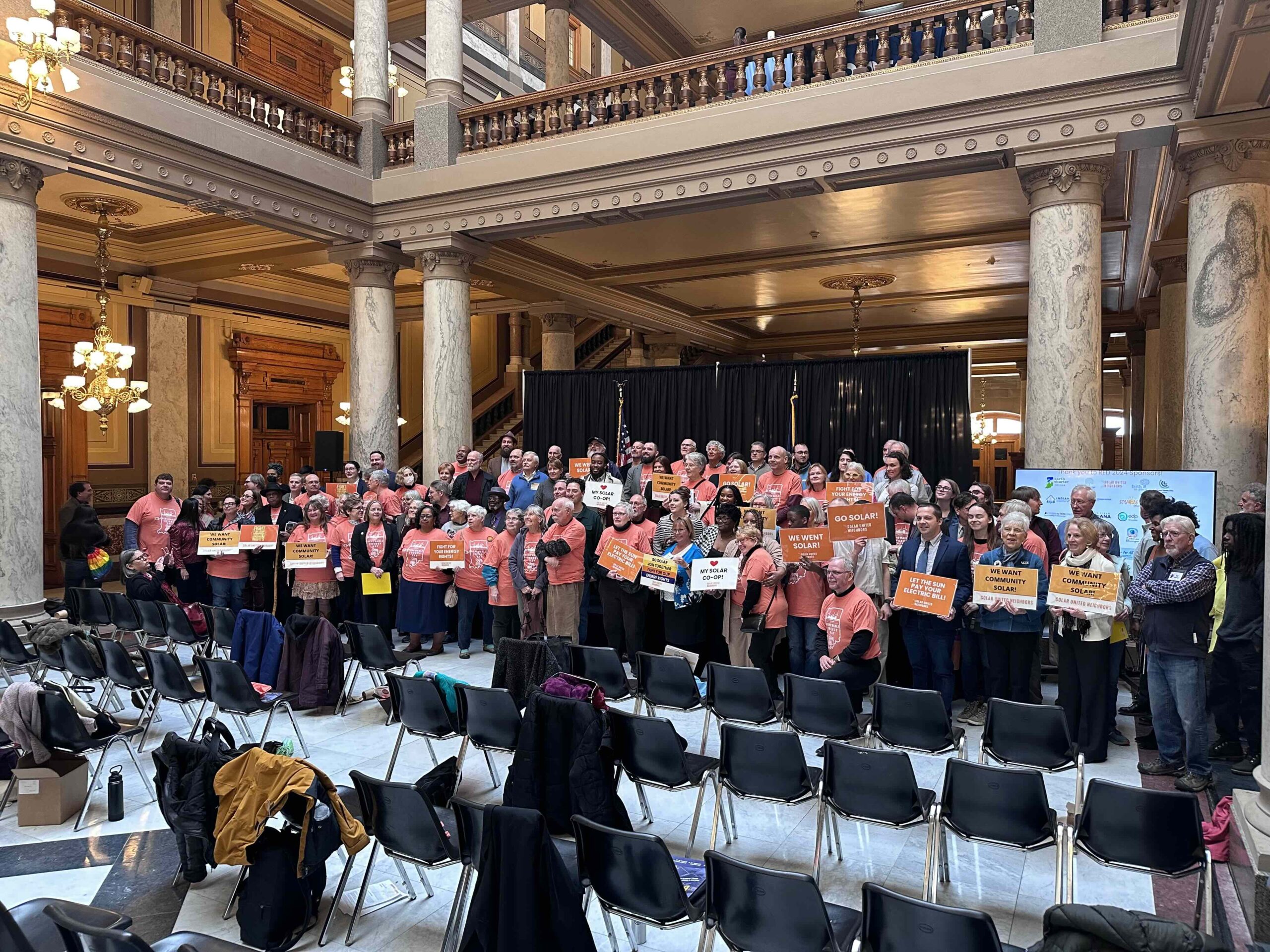
    More than 200 Hoosiers from around the state convened today at the Indiana Statehouse to advocate for their energy rights at the sixth annual Renewable Energy Day. Participants met with their legislators throughout the day and attended a press conference featuring policymakers and advocates.

    Selected quotes from press conference speakers:

    Jalisa Mauldin, Indiana Outreach Director, Faith in Place

    “The reason we have all boarded buses and left our regular weekday routines is for the chance to show our legislators that we care about Indiana’s clean energy future, and want to ensure that it includes the diverse communities and faces of Indiana.

    “Whether you are a homeowner or renter; Whether you are young or old; Whether you live in rural or urban cities; Whether you’re a Democrat, Republican, or don’t subscribe to any party—Community Solar offers us all the accessibility, affordability, and reliability that we seek as Hoosiers.”

    Indiana State Rep. Carey Hamilton

    “You need to engage your local elected officials and candidates for office in this conversation ask them to commit to being renewable energy champions, to being community solar champions to being common sense energy policy champions.”

    Bennett Fuson, EDP Renewables

    “This group is indicative of the success we hope to achieve. It truly is amazing to see so many people here who are so interested in seeing renewable energy grow in indiana.

    “I think this group sends a pretty powerful message, and that is that Hoosiers want renewable energy. Hoosiers expect renewable energy. When we talk about renewable energy in Indiana we’re talking about freedom and opportunity.” 

    2024 RED Event Sponsors:

    • Center for Energy Education
    • Citizens Action Coalition 
    • Citizens’ Climate Lobby
    • Creation Care Partners
    • Drive Clean Indiana
    • Earth Care Bloomington
    • Earth Charter Indiana 
    • EDP Renewables
    • Energy Matters Community Coalition
    • Faith in Place
    • Geenex Solar
    • Greater Indiana Clean Cities, Inc.
    • Hoosier Chapter Sierra Club
    • Hoosier Electric Vehicle Association
    • Hoosier Environmental Council
    • Hoosiers for Renewables
    • IN-ACRE
    • IndianaDG
    • League of Women Voters of Indiana
    • Morton Solar & Electric, LLC
    • SIREN and Indiana Solar for All 
    • Solar Energy Solutions
    • Solar United Neighbors
    • Solarize Indiana
    • Whole Sun Solar 
  • Where Could Community Solar Be Installed in Indiana?

    Where Could Community Solar Be Installed in Indiana?

    As Hoosiers pursue a sustainable future and lower energy costs, community solar has emerged as a beacon of hope, offering a pathway towards cleaner energy while fostering community engagement and resilience.

    One of the remarkable aspects of community solar is its versatility—it can be implemented in a variety of spaces, breathing new life into underutilized areas. Let’s explore some of the places that can benefit from community solar, showcasing the transformative power of renewable energy.

    Brownfield Sites: Reviving Abandoned Industrial Landscapes

    Brownfield sites, once bustling hubs of industrial activity, now stand as reminders of a bygone era. These abandoned spaces often pose environmental challenges, contaminated by previous industrial processes. However, community solar presents an opportunity to repurpose these sites, transforming them into clean energy powerhouses. By installing solar panels on brownfield sites, communities can revitalize these areas, mitigating pollution while generating renewable energy. It’s a win-win scenario that breathes new life into forgotten landscapes.

    Rooftops of Warehouses and Municipal Buildings: Utilizing Existing Infrastructure

    Warehouses and municipal buildings dot the urban landscape, their rooftops often overlooked potential platforms for renewable energy generation. Community solar initiatives can leverage these existing structures, maximizing space efficiency and minimizing land use. By installing solar panels on rooftops, communities can harness the power of the sun without encroaching on precious green spaces. It’s a pragmatic approach that transforms idle rooftops into vibrant sources of clean energy, reducing dependence on fossil fuels.

    Unneeded Parking Lot Space: Paving the Way for Solar Canopies

    Parking lots, ubiquitous in urban and suburban areas, represent vast expanses of underutilized space. However, with the advent of solar canopies, these asphalt deserts can undergo a remarkable metamorphosis. Solar canopies, erected over parking lots, not only provide shade for vehicles but also harness solar energy, offsetting electricity costs and reducing carbon emissions. By repurposing unneeded parking lot space for solar infrastructure, communities can optimize land use while promoting sustainable transportation solutions.

    Sub-prime Agricultural Land: Cultivating Solar Harvests

    Sub-prime agricultural land, characterized by poor soil quality or limited agricultural potential, presents a unique opportunity for solar development. By deploying solar panels on these less-than-ideal farmlands, communities can diversify land use and bolster local economies. Agricultural solar installations allow farmers to continue generating revenue from their land while contributing to the renewable energy transition. It’s a symbiotic relationship between agriculture and solar energy, fostering resilience in rural communities and combating climate change.

    Conclusion: Independent Community Solar Could Be Installed in a Variety of Places, Spaces Across Indiana

    Community solar has the remarkable ability to transform spaces, breathing new life into neglected areas while advancing the transition to clean energy. From brownfield sites to unneeded parking lots, no space is beyond the reach of solar innovation.

    By embracing community solar initiatives, communities can not only reduce their carbon footprint but also foster economic growth and community resilience. It’s time for our state to harness the power of the sun and embark on a journey towards a brighter, more sustainable future.

  • Empowering Hoosiers: Why Community Solar Makes Sense for Our State

    Empowering Hoosiers: Why Community Solar Makes Sense for Our State

    In the heart of the heartland, where Hoosier values run deep, a new opportunity is emerging that aligns perfectly with our principles: community solar. Let’s delve into why this innovative approach to energy is not only compatible with Hoosier values but also essential for the prosperity of Indiana.

    Energy Freedom: Choice and Competition

    Hoosiers believe in the power of individual choice and competition. When it comes to energy, consumers should have the freedom to choose where and how they get their power. Community solar programs empower Hoosiers to take control of their energy options, breaking free from monopoly utilities and opening up a competitive marketplace where innovation thrives.

    Economic Growth: Fostering Opportunity

    Community solar isn’t just about clean energy; it’s about economic growth. By embracing this initiative, Indiana creates a new market for the solar industry, stimulating job growth and fostering entrepreneurship. A recent report from WorkingNation projects a significant increase in demand for green jobs in our state over the next five years, providing opportunities for our hardworking citizens to thrive.

    Property Rights + Reuse: Maximizing Land Potential

    Property rights are sacrosanct to Hoosiers, and community solar respects these rights while maximizing land potential. Farmers can lease their land to solar developers, diversifying their income streams and ensuring the continued prosperity of our agricultural communities. Additionally, community solar can breathe new life into brownfields and other underutilized land, turning liabilities into assets and revitalizing our landscapes.

    Energy Resiliency: Security and Independence

    Energy independence is vital for the security and prosperity of our state. By embracing community solar, we reduce our dependence on neighboring states and foreign energy sources. Homegrown Hoosier energy not only lowers costs for consumers but also enhances grid reliability, ensuring that our communities remain resilient in the face of external disruptions.

    Energy Fairness: Inclusion and Opportunity

    Hoosiers believe in fairness and opportunity for all. Community solar is a game-changer in this regard, ensuring that all Hoosiers can benefit from the transition to renewable energy. Low-income Hoosiers and communities of color, often overlooked in traditional energy policies, could have access to clean, affordable power with community solar. Moreover, renters and property owners alike can participate in the solar revolution, leveling the playing field and expanding ownership opportunities.

    In conclusion, independent community solar embodies Hoosier values of freedom, economic growth, property rights, resiliency, and fairness. By embracing this initiative, Indiana can lead the way towards a brighter, more prosperous future for all Hoosiers. Let’s seize this opportunity to empower our communities, strengthen our economy, and safeguard our energy independence.

  • Hoosiers for Community Solar hosts Community Solar 101 Webinar

    Hoosiers for Community Solar hosts Community Solar 101 Webinar

    Are you curious about how community solar can revolutionize your energy consumption habits while making a positive impact on the environment? Look no further! Our Community Solar 101 webinar is designed to shed light on the incredible benefits of community solar and how it can transform not only your own energy usage but also benefit your entire community.

    Watch the webinar and explore the advantages of embracing clean, renewable energy sources. Discover how community solar initiatives pave the way for a greener future, reducing your carbon footprint and contributing to a more sustainable world. Plus, learn how you can potentially save on your energy bills by harnessing the power of the sun!

    Our panel of experts will guide you through everything you need to know about community solar, offering valuable insights and practical tips to help you make informed decisions. From understanding the environmental impact to navigating the financial benefits, we’ve got you covered.

    Don’t miss this opportunity to gain exclusive access to insider knowledge and unlock the full potential of solar energy for you and your community. Reserve your spot today and embark on a journey towards a brighter, cleaner tomorrow!

    webinar graphic image featuring Hoosiers for Community solar logo and logos from allied organizations that are part of the Hoosiers for Community Solar push to bring independent community solar to Indiana

    In this webinar, you will discover how community solar can positively impact both you, your community and the environment. We will delve into the benefits of clean, renewable energy and how it can help you reduce your carbon footprint while potentially saving on energy bills. Our expert speakers will provide insights, answer your questions, and share valuable information about the opportunities that await you in the world of solar energy.