Tag: policy

  • Lower Bills + Local Jobs: What Indiana Can Learn From Illinois’ Community Solar Success

    Lower Bills + Local Jobs: What Indiana Can Learn From Illinois’ Community Solar Success

    When we talk about renewable energy, one question comes up time and again: How can all families—especially renters, seniors, and working-class households—find a way to participate and save money?

    Right across our state border in Illinois, a case study published by The Pew Charitable Trusts offers an answer. Highlighting a 2-megawatt community solar project in suburban Chicago, Pew’s research demonstrates how state-supported community solar policy can deliver guaranteed savings directly to residents who can’t put panels on their own roofs.

    The case study explains how community solar opens up clean energy benefits to customers often left out of the market:

    “The flyer introduced Dianne to community solar, a type of distributed energy resource that allows consumers to benefit from solar energy without installing panels on their roofs. For renters or households unable to afford upfront installation costs, community solar opens access to energy savings that otherwise would be out of reach. Amid rising energy costs across the country, this approach not only supports cleaner energy but provides a pathway to more affordable bills.”

    The real-world impact for local residents on fixed or modest incomes is immediate and measurable:

    “Because the Torrence project predominantly serves communities with low-to-moderate household incomes, it plays an important role in addressing energy burden, a metric that defines the percentage of income a household spends on electricity bills. On average, low-income households have an energy burden of 6%, which is three times higher than that of other households… Through discounted electricity rates, subscribers receive guaranteed savings on their energy bills. During its first year of operation… the Torrence project delivered an estimated $186,000 in total customer savings.”

    Furthermore, the case study shows that community solar isn’t just about reducing utility bills. It’s also an economic engine for the broader community, supporting local agriculture through dual-use practices like solar grazing and creating local construction and maintenance jobs:

    “Development and construction activities—including more than $3.5 million in local and regional supplier spending and the generation of more than $1 million over the next 20 years from property taxes and lease payments—have further supported the local economy.”

    As Illinois demonstrates, when policymakers establish frameworks that allow community solar to thrive, everybody wins: ratepayers save money, local governments gain tax revenue and agricultural families gain new income streams.

    As utility bills continue to climb and expensive fossil fuels continue to present health risks, we’re hopeful that Indiana will embrace policies that give Hoosier families these same choices.
  • Empowering Advocates: How to Talk about Independent Community Solar to Counter Anti-Consumer Monopoly Messaging

    Empowering Advocates: How to Talk about Independent Community Solar to Counter Anti-Consumer Monopoly Messaging

    As momentum for clean energy grows, community solar programs have emerged as a powerful tool for reducing energy costs and promoting sustainable practices.

    However, monopoly utility companies often present significant challenges, using their influence to block access to these beneficial programs. It is crucial for advocates to help policymakers understand the value and mechanics of independent community solar to effectively counter these anti-consumer arguments.

    This story highlights how monopoly utility companies in California are actively working to limit access to community solar. These companies argue that community solar threatens their business model and could lead to increased costs for non-participating customers.

    However, these claims obscure the larger benefits of community solar. Independent community solar programs allow multiple households to share the benefits of a single solar installation, providing access to renewable energy without the need for individual rooftop panels.

    This model not only reduces energy costs for participants but also promotes energy equity by making solar power accessible to a broader segment of the population, including those who may not have suitable rooftops for solar panels.

    Policymakers play a vital role in fostering the growth of community solar. By understanding the mechanics and benefits of independent community solar programs, they can craft legislation that supports these initiatives. Advocates for community solar can use these messages to help make their case to policymakers:

    1. Consumer Savings: Emphasize the substantial cost savings that community solar programs offer to consumers. Highlight real-world examples and data showing the financial benefits to participants.
    2. Energy Equity: Stress the importance of making renewable energy accessible to all, including low-income households and those living in multi-family buildings or areas unsuitable for individual solar installations.
    3. Environmental Impact: Highlight the environmental benefits of community solar, including the reduction of greenhouse gas emissions and the promotion of sustainable energy practices.
    4. Economic Growth: Point out the potential for job creation and local economic growth associated with the development of community solar projects.

    By focusing on these messaging points, advocates can build a compelling case for independent community solar and counter the anti-consumer rhetoric of monopoly utility companies. Understanding and advocating for community solar is not just about promoting clean energy; it’s about ensuring a fair, equitable and sustainable energy future for all.

    You can help share out the benefits of community solar programs using the resources here.

  • New Report Shows Community Solar is a Pathway to Energy Equity

    New Report Shows Community Solar is a Pathway to Energy Equity

    A new study from Lawrence Berkeley National Labs (LBNL) illustrates the transformative potential community solar projects have to advance energy equity. The report highlights how these projects not only democratize access to clean energy but also foster significant social and economic benefits for underserved communities.

    For the first time, the researchers combine household-level data from Berkeley Lab’s Tracking the Sun rooftop solar adopter data set with data compiled under NREL’s Sharing the Sun community solar research, as well as additional community solar adopter data collected for the study. To determine how well community solar is serving the needs of those who are underserved by the rooftop solar market, the study looked at the demographic characteristics of the two adopter groups.

    Based on a sample of 11 states, the LBNL study found that community solar adopters in 2023 were about 6.1 times more likely to live in multifamily buildings than rooftop solar adopters, 4.4 times more likely to rent, and earned 23% less annual income. Based on this, the researchers conclude that community solar has effectively expanded solar access to multifamily housing occupants, renters and low-income households.

    PV Magazine, June 2024, “Community solar increases energy equity, report finds”

    The Promise of Community Solar

    Community solar projects allow multiple households, businesses and organizations to share the benefits of a single solar array. This model is particularly advantageous for those who may not have the resources to install solar panels on their own properties, such as renters, low-income families and those living in shaded areas.

    The new report underscores that community solar is more than just an environmental initiative; it’s a vehicle for social change. By pooling resources and leveraging economies of scale, community solar projects make renewable energy accessible and affordable to a broader segment of the population.

    Key Findings of the Report

    The report, a collaborative effort by various energy and social justice organizations, outlines several key benefits of community solar:

    1. Increased Accessibility: Community solar projects break down the barriers to solar adoption, providing equitable access to clean energy for all socio-economic groups.
    2. Economic Benefits: Participants in community solar projects can see significant savings on their energy bills. These savings are particularly impactful for low-income households, helping to reduce energy poverty.
    3. Environmental Impact: By increasing the adoption of renewable energy, community solar projects contribute to a reduction in greenhouse gas emissions, supporting broader environmental and climate goals.
    4. Social Cohesion: These projects foster a sense of community and shared purpose, as participants collectively contribute to and benefit from local renewable energy production.
    5. Job Creation: The development and maintenance of community solar projects create local jobs, boosting the economy and providing new opportunities in the green energy sector.

    What Hoosiers For Community Solar Supports

    As a coalition, we are working to enable independent community solar as a tool to make the benefits of renewable energy accessible to all Hoosiers.

    It’s clear that local clean energy is our future, but it needs to be the future for every day Hoosiers—not just big companies and utilities. Our shared vision is a statewide policy that supports:

    • Community and other independent ownership of community solar
    • Tangible savings for subscribers
    • Competitive and transparent markets for community solar development
    • Equitable access to the benefits of community solar for all Hoosiers

    Looking Ahead

    As the world grapples with the twin challenges of climate change and social inequality, community solar projects offer a viable solution that addresses both issues simultaneously. The findings of this report highlight the need for a concerted effort from policymakers, industry stakeholders and the community at large to support and expand these initiatives.

    By prioritizing community solar, we can create a more equitable and sustainable energy future for all. This report serves as a timely reminder that the path to energy equity is paved with innovation, collaboration and a shared commitment to progress.

  • What Do Artificial Intelligence and Community Solar Have in Common? Consistency and Equity.

    What Do Artificial Intelligence and Community Solar Have in Common? Consistency and Equity.

    Artificial intelligence (AI) is revolutionizing various industries, and the solar energy sector is no exception. As solar companies strive to optimize their operations and enhance customer satisfaction, AI offers innovative solutions to predict and plan for customer needs more effectively. This technological advancement is particularly significant for community solar projects, where managing subscriber bases and promoting equity are top priorities.

    AI in Community Solar Projects

    Community solar projects are designed to provide solar energy access to a broader audience, including those who may not have the means to install solar panels on their own properties. These projects rely on a complex web of subscribers, each with unique energy consumption patterns and preferences. Managing this diverse subscriber base can be challenging, but AI is stepping in to simplify the process.

    A recent article on Energy News highlights how community solar developers are leveraging AI to manage subscribers more efficiently. By analyzing data from various sources, AI algorithms can predict energy consumption patterns, helping companies tailor their services to meet individual customer needs. This not only improves customer satisfaction, but also ensures that energy production aligns more closely with actual demand, reducing waste and enhancing overall efficiency.

    Advancing Equity Through AI

    One of the most promising aspects of AI in community solar projects is its potential to advance equity. Traditionally, solar energy has been more accessible to wealthier individuals and those living in suitable geographical locations. However, AI can help identify underserved communities and design targeted initiatives to bring solar energy to these areas.

    According to Latitude Media, community solar projects are increasingly using machine learning to map out areas with high potential for solar adoption but low current usage. This enables companies to focus their outreach and marketing efforts on these communities, ensuring a more equitable distribution of solar energy benefits.

    Furthermore, AI can assist in creating flexible subscription models that cater to the financial capabilities of different customer segments, making solar energy more accessible to low-income households.

    Predictive Maintenance and Grid Management

    AI’s predictive capabilities extend beyond customer management. Solar companies also are using AI to monitor the health of their solar installations and predict maintenance needs. By analyzing data from sensors and historical performance records, AI can identify potential issues before they become significant problems, reducing downtime and maintenance costs.

    Moreover, AI can optimize grid management by predicting fluctuations in energy production and consumption. This is particularly important for integrating solar energy into the broader energy grid, which requires careful balancing to prevent outages and ensure a stable supply of electricity. By forecasting these fluctuations, AI helps solar companies and grid operators maintain a reliable and efficient energy system.

    The Future of AI and Solar Energy

    The integration of AI into the solar energy sector marks a significant step forward in optimizing operations, enhancing customer satisfaction and promoting equity.

    For community solar projects, in particular, AI may offer a powerful tool to manage subscribers, predict energy needs and ensure that the benefits of solar energy are distributed more equitably. As AI technology continues to evolve, its impact on the solar industry is likely to grow, paving the way for a more sustainable and inclusive energy future.

  • What do dairy cows and community solar have in common?

    What do dairy cows and community solar have in common?

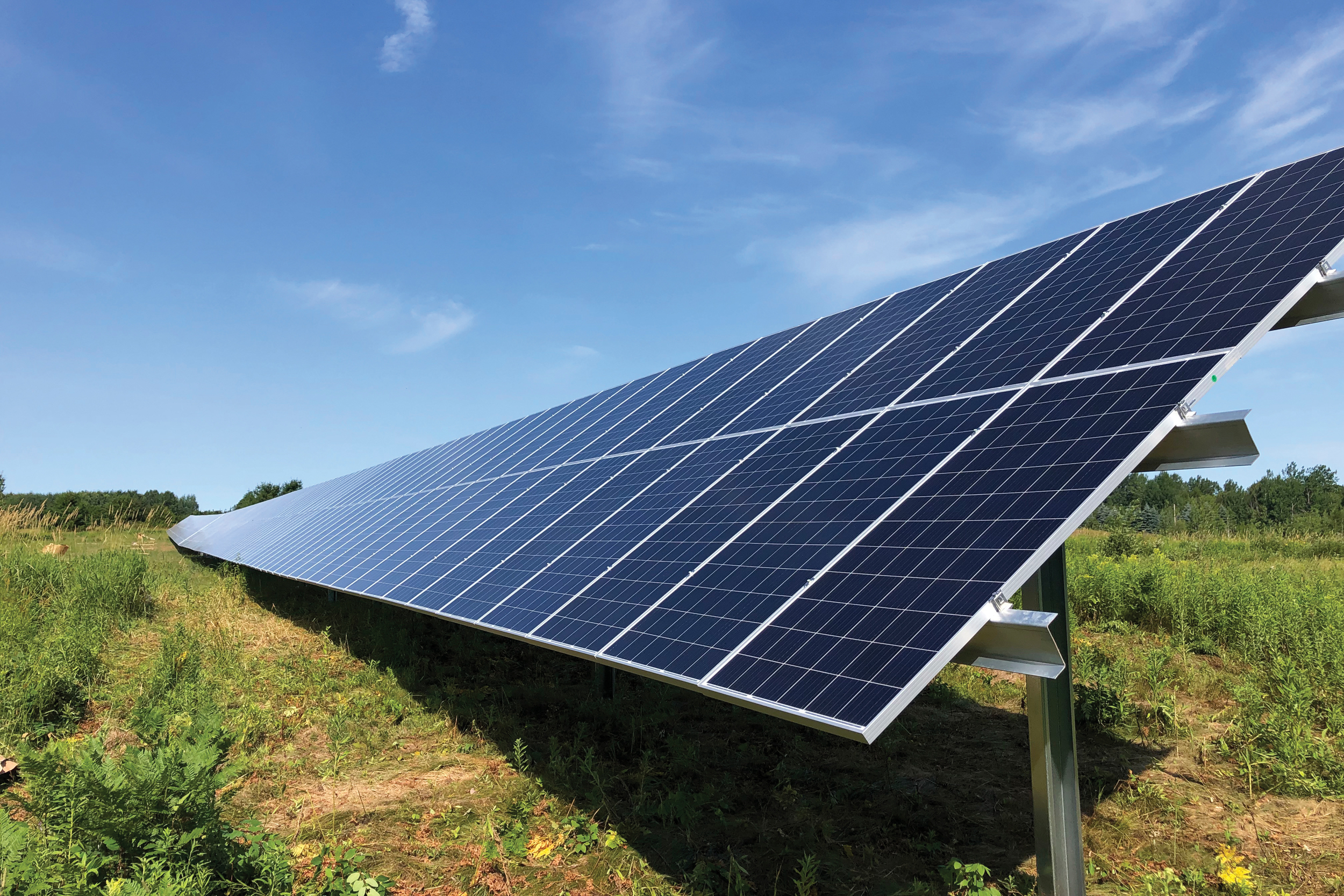
    Community solar is going to power six locally run dairy farms in Vermont thanks to two recently completed projects developed on underutilized land.

    The Vermont dairy industry itself generates over $2.2 billion annually, but increasingly thin margins are leading local farmers to seek out new ways to compete without losing use of any of their land. Community solar projects are a great solution.

    These community solar projects consist of two 500 kW (864 kWdc) ground-mount solar arrays on less productive land in Newbury and Jamaica, Vermont. The solar projects are designed to help reduce fixed energy costs so the farms can increase profit margins.

    Solar Builder Magazine, May 2024, “Community solar saving Vermont dairy farms”

    Community solar projects like this one have the potential to unite local communities through shared investment in clean energy infrastructure. By subscribing to a local solar farm, community members or local businesses can directly participate in the generation of renewable energy, reducing their reliance on fossil fuels and lowering electricity bills. This shared endeavor can foster a sense of collective responsibility and pride, encouraging collaboration and strengthening community bonds.

    Moreover, community solar projects offer a unique opportunity to repurpose underutilized land for the benefit of the community. Vacant lots, brownfields or even rooftops can be transformed into solar farms, generating clean energy and revenue for the local economy. This not only maximizes land use but also revitalizes neglected areas, contributing to the overall aesthetic and economic development of the community.

    Community solar projects also generate local jobs, from installation and maintenance to project management and education. This provides employment opportunities for residents and further stimulates the local economy. Additionally, the revenue generated from these projects can be invested in community initiatives, such as education programs, infrastructure improvements or social services, further benefiting the community as a whole.

  • Stateline.org: “Can’t install your own solar panels? Some areas let you join a community project.”

    Stateline.org: “Can’t install your own solar panels? Some areas let you join a community project.”

    There’s no other way to say it: This recent article from Stateline.org is fantastic—and makes the clear case why we need independent community solar here in Indiana.

    This year, lawmakers in at least 10 states have put forward bills that would enable or expand community solar programs, driven in part by federal funding opportunities from the Inflation Reduction Act. Citing consumer choice and affordability, a growing number of Republican lawmakers have sponsored such proposals, including in seven of those states.

    But some bills have stalled amid strong opposition from utilities, which have argued that community solar programs don’t account for costs such as billing overhead and distribution fees, which are passed on to non-subscribing ratepayers.

    Stateline.org, May 2024, “Can’t install your own solar panels? Some areas let you join a community project.”

    There are lots of reasons why monopoly utilities don’t like independent community solar laws that put power directly in the hands of local communities.

    • Loss of Control and Profit: Monopoly utilities traditionally hold exclusive power over energy generation and distribution. Community solar disrupts this model, empowering individuals and communities to generate their own electricity. This decentralization reduces utilities’ control over the market and can lead to decreased profits.
    • Reduced Revenue: When homeowners and businesses install rooftop solar or subscribe to community solar projects, they purchase less electricity from the utility. This can directly impact the utility’s bottom line.
    • Perceived Threat to Reliability: Utilities sometimes express concerns that community solar projects could destabilize the grid. However, with proper planning and integration, these concerns can be addressed, and community solar can actually add to grid resilience.
    • Challenges to Existing Business Model: The traditional utility model is based on building large, centralized power plants. Community solar is a decentralized model, requiring utilities to adapt their business practices and infrastructure. This transition can be perceived as costly and complicated.

    “[Utilities] would rather have their monopoly on the grid, and they have their claws in the entire political ecosystem,” said Matt Hargarten, public affairs director with the Coalition for Community Solar.

    Stateline.org, May 2024, “Can’t install your own solar panels? Some areas let you join a community project.”

    In some cases, utilities will be supportive of community solar—but only if they’re in charge of it.

    But advocates say such utility-run programs aren’t truly community solar, as they fail to reach the scale and cost savings of those offered by third-party developers.

    “What’s important is creating a competitive market that allows for non-utility project developers,” said Maria McCoy, a researcher with the Institute for Local Self-Reliance, a nonprofit that seeks to empower local communities. “Subscribers should save money and not be paying a premium.”

    Stateline.org, May 2024, “Can’t install your own solar panels? Some areas let you join a community project.”

    Despite the clear advantages of community solar, Indiana currently lacks comprehensive legislation to enable and promote these programs. While some utilities may offer limited community solar options, these programs are often restricted and don’t meet the full potential of community solar.

    That’s why Indiana needs independent community solar. Our shared vision is a statewide policy that supports:

    • Community and other independent ownership of community solar
    • Tangible savings for subscribers
    • Competitive and transparent markets for community solar development
    • Equitable access to the benefits of community solar for all Hoosiers

    By enacting independent community solar legislation, Indiana can unlock the potential of this clean energy source and join other states that already are leading the way for their residents.

  • Do You Live in Southwest Indiana? Join Community Solar Advocates on May 4 for the Evansville Solar Congress

    Do You Live in Southwest Indiana? Join Community Solar Advocates on May 4 for the Evansville Solar Congress

    With local utility rates soaring through the roof, solar energy enthusiasts, homeowners and community members are invited to attend the Evansville Solar Congress on May 4.

    The free event will focus on the current state and potential of solar energy in Southwest Indiana, providing valuable information about:

    • How clean energy can lower energy costs for homeowners, small businesses and community solar participants;
    • Incentives available for local solar installations;
    • The additional benefits of community solar for those who can’t install their own panels;
    • Current policy barriers and how to overcome them.

    Attendees will have the chance to network with fellow solar supporters, discover local involvement opportunities and take actionable steps to promote solar adoption in the region.

    Event Details:

    Evansville Solar Congress
    Saturday, May 4
    11:30 a.m. – 3 p.m. CDT
    Bethlehem United Church of Christ
    6400 Oak Hill Road 
    Evansville, IN 47725

    Cost: Free (food and refreshments provided)

    Registration: Evansville-SC.eventbrite.com

    promotional graphic for Evansville Solar Congress which will include community solar advocates gathering to discuss policy on May 4

    About Solar United Neighbors

    Solar United Neighbors is a nonprofit organization that works in Indiana and nationwide to represent the needs and interests of solar owners and supporters. SUN holds events and education programs to help people become informed solar consumers, maximize the value of their solar investment, and advocate for fair solar policies.

  • New Virginia Community Solar Law Reflects Compromise and Makes Incremental Progress

    New Virginia Community Solar Law Reflects Compromise and Makes Incremental Progress

    Last week, Virginia Gov. Glenn Youngkin signed a bill designed to improve and expand shared solar access in Dominion Energy territories and create a shared solar program for customers in southwest Virginia.

    The Virginia legislation will enable up to 150 MW to be added to Dominion Energy’s shared solar program, allowing certain projects located on rooftops, brownfields, landfills, or dual-use agricultural facilities to be eligible for incentives determined by the Virginia Department of Energy. It will also create a shared solar program of 50 MW for Appalachian Power Company.

    The Coalition for Community Solar Access was hoping that the bills would allow 2 GW of community solar between the two  utilities, but instead it is just 200 MW. However, while these bills are not as ambitious as hoped by community solar proponents, they represent a bipartisan compromise and will help to launch shared solar in this southern state. Both bills require that utilities consider the benefits of shared solar to the electric grid and to the State when calculating the minimum bill for customers.

    PV Magazine, April 2024, “Virginia governor signs legislation establishing community solar”

    Bringing more clean energy into the mix is a good thing, but Hoosiers for Community Solar hopes Indiana will go beyond utility-owned community solar to ensure everyone can harness the power of the sun.

    Utility-owned community solar projects offer a straightforward path for consumers to access renewable energy, often facilitated by their existing relationship with their utility provider. These projects can provide a sense of reliability and simplicity, as they are managed by established entities. However, the true potential of community solar lies in projects that are independently owned and operated.

    Independent community solar represents the gold standard for consumer benefits for several reasons. First, it fosters a competitive market, leading to more favorable pricing and innovative service offerings for consumers. Without the monopoly influence of a single utility provider, independent projects must vie for consumer attention, which can result in better deals for customers.

    Moreover, independent community solar projects are typically more aligned with community interests. They can be more responsive to local needs and support local hiring within the community, and they often have a stronger commitment to environmental stewardship. This local focus not only benefits the community directly but also increases the overall sustainability impact of the solar project.

    Finally, the flexibility of independent projects allows for more consumer choice in terms of subscription models, contract lengths and the specific environmental benefits provided. Consumers can choose projects that match their values, whether that’s supporting local job creation, maximizing environmental impact or prioritizing cost savings. This level of choice and personalization is something that utility-owned projects, which often adopt a one-size-fits-all approach, can rarely match.

    As we look toward the future in Indiana, utility-owned community solar projects can be a step in the right direction, but independent community solar offers a richer set of benefits that align more closely with Hoosiers’ interests and the broader goal of empowering more people to be part of the renewable energy movement.

  • Can Indiana Do Better Than 33rd Place in New Wallethub “Green” State Ranking?

    Can Indiana Do Better Than 33rd Place in New Wallethub “Green” State Ranking?

    According to a new Wallethub study, Indiana ranks as one of the least “green” states in the nation.

    The study was based on 25 metrics including air quality, energy efficiency, green buildings per capita, and gasoline consumption. Indiana was ranked 33rd out of the 50 states in the study.

    In environmental quality, Indiana was ranked 8th. The state was also tied for second in air quality with Wyoming. Indiana was also ranked 39th in eco-friendly behaviors and 41st in climate change contributions.

    WIBC, April 2024, “Wallethub: Indiana is One of the Least “Green” States in the U.S.”

    To elevate our green ranking, Indiana could embrace statewide, independent community solar policy. Community solar allows residents to benefit from solar energy without having to install panels on their property, ideal for those who rent, live in apartments or have shaded rooftops. Indiana’s push towards community solar could significantly improve its standings in eco-friendly behaviors and energy efficiency, two areas where the state currently lags.

    By investing in community solar, Indiana could lower energy costs for its residents, reduce reliance on fossil fuels and improve air quality. These projects could also stimulate the local economy by creating jobs and encouraging technological innovation. As community solar projects become more widespread, they could serve as a tangible demonstration of Indiana’s commitment to sustainability and environmental stewardship.

    Moreover, community solar projects can enhance community resilience against power outages and reduce the state’s carbon footprint, addressing the climate change contributions metric where Indiana currently ranks poorly. By focusing on community solar, Indiana can not only climb the ranks of the greenest states but also set a precedent for sustainable living for other states in the Midwest to follow.

  • Pennsylvania community solar legislation moves forward in House with promise of clean energy for renters

    Community solar legislation is on the move in Pennsylvania after legislation cleared the House of Representatives last week by a 111-99 vote.

    This innovative initiative will allow residents who rent their homes—among others—to benefit from the cost savings and environmental advantages of solar energy.

    While the technology is growing in many communities, bill sponsor Allentown Democratic Rep. Peter Schweyer said areas like the one he represents – of which renters make up 65% – have row homes and historic districts where solar panels cannot be installed. 

    Not taking advantage of available federal grants, Schweyer said during a recent committee hearing, would decrease the likelihood of the bill moving forward. An emphasis was placed on making sure there are zero negative impacts on non-solar ratepayers. 

    “For years, we’ve been hung up on how to help the development of community solar,” he said during the floor vote Tuesday. “And many both inside our chamber and outside of our chamber have rightfully insisted that the costs of these developments should never be pushed onto other ratepayers.”

    The Center Square, March 30

    Breaking Down Barriers for Renters

    Traditionally, renters have been excluded from the solar energy market due to the installation process typically requiring modifications to the roof. This new plan removes those barriers by focusing on community solar projects. Under this model, renters could subscribe to a solar farm and receive credits on their electricity bills for the power generated.

    Federal Subsidies Paving the Way

    The Pennsylvania plan leverages federal subsidies to make community solar accessible to renters. These subsidies will help offset the upfront costs associated with developing and maintaining solar farms, making solar energy a more attractive option for both renters and project developers.

    Concerns and Considerations

    While the plan represents a significant step forward, lawmakers have expressed concerns about the long-term costs of decommissioning solar panels once they reach the end of their lifespan. Addressing these concerns will be crucial for ensuring the sustainability of the program.

    A Bright Future for Indiana

    The success of Pennsylvania’s renter-friendly solar plan serves as a beacon of hope for states like Indiana that have yet to implement similar legislation. As Indiana grapples with its own energy future, exploring community solar initiatives that benefit all residents, regardless of their housing situation, should be a top priority.

    By following Pennsylvania’s lead, Indiana could unlock the potential of solar energy and create a more equitable and sustainable energy landscape for all Hoosiers.

  • Utility Dive: “Utilities must come clean about the full value of community solar”

    Utility Dive: “Utilities must come clean about the full value of community solar”

    Independent community solar policy that creates competitive and transparent markets for development often draws pushback from monopoly-owned utilities.

    Jeff Cramer, CEO of Coalition for Community Solar Access, and John Farrell, co-director of the Institute for Local Self Reliance, recently wrote an incredible opinion piece for Utility Dive making it clear why utilities are in opposition—and why they often misrepresent the truth.

    It’s really rather simple: utilities often oppose customer-driven, third-party owned energy projects like community solar because they threaten to supplant utility investments and shareholder profits. They use “cost-shift” — the idea that when one ratepayer benefits, the others bear the cost — as their bogeyman. And because utility ratemaking happens in a black box, it’s hard for legislators to argue against it.

    Community solar provides every household and business the opportunity to subscribe to solar energy without needing to install a system on site. The projects are typically 5 MW and below, serving up to 1,000 households, and a great way to bring bill savings to those who historically haven’t had access to clean energy. Leveraging millions in capital from individuals, businesses and entrepreneurs, community solar means accelerating an all-of-the-above approach to clean energy deployment.

    But if we’re going to harness the benefits of community solar, we need the utilities to stop spreading misinformation about costs and come clean about the value these projects bring to the grid.

    The truth is that research and numerous cost-benefit analyses show that investing in smaller projects built on the distribution network — like community and rooftop solar — bring unique benefits to all ratepayers on the grid. And when those benefits are properly accounted for, the costs for electric customers are virtually identical to utility-scale projects.

    Utility Dive, March 2024

    The question facing Hoosiers: Do we want a future defined by innovation, customer choice and healthier energy sources? Or will we cling to outdated monopolies that stifle progress and keep us in the dark ages of electricity?

    We are at a crossroads when it comes to how we power our lives and homes, and community solar presents a massive opportunity.

    Imagine a grid that’s smarter, cleaner, and puts more control in our hands. We can break free from the monopolies and build a system that lowers our bills, creates healthy competition and drives cutting-edge solutions that leave fossil fuels behind.

    The power to shift our outdated grid could be in our hands, but only if we break through the misleading utility rhetoric and show how community solar can work for all Hoosiers.

  • Shine Bright in Indiana: The Power of Community Solar

    Shine Bright in Indiana: The Power of Community Solar

    Hoosiers across Indiana are seeking ways to save money on electricity and embrace clean energy. Community solar offers a revolutionary solution, allowing everyone to benefit from solar power, even if you can’t install panels on your own roof.

    How Indiana’s Community Solar Works (or Why It Doesn’t… Yet)

    Here’s a breakdown of community solar and its current status in Indiana:

    • National Landscape: Across the country, community solar allows individuals, businesses, and organizations to subscribe to a portion of a shared solar array, receiving bill credits based on their share of energy produced.
    • Indiana’s Situation: Unfortunately, Indiana has not yet legalized independent community solar programs. However, there are efforts underway to change this!

    The Potential Benefits of Community Solar in Indiana

    Even though Indiana doesn’t have independent community solar programs yet, here’s what Hoosiers can look forward to:

    • Cost Savings: Subscribers can save on their electricity bills, often 10-15%.
    • Accessibility: Renters, those with unsuitable roofs, or anyone who can’t afford a personal solar system can access solar benefits.
    • Environmental Impact: Supports clean energy generation and reduces reliance on fossil fuels.
    • Grid Resilience: Boosts local power grids, making them more reliable.
    • Community Investment: Community solar projects can bring economic development and jobs to local areas.

    How Hoosiers Can Get Involved in Bringing Community Solar to Indiana

    Here’s what you can do to advocate for community solar in Indiana:

    1. Stay Informed: Follow organizations like Hoosiers for Community Solar to stay updated on advocacy efforts.
    2. Contact Representatives: Voice your support for community solar to your state legislators.
    3. Spread Awareness: Talk to friends, family, and neighbors about the benefits of community solar and share resources on social media.

    Conclusion

    While Indiana hasn’t legalized independent community solar yet, there’s a bright future ahead. By staying informed and getting involved, Hoosiers can pave the way for a more sustainable and affordable energy future with community solar.

  • The Inflation Reduction Act and Solar Energy: How Solar for All Could Expand Renewable Energy in Indiana

    The Inflation Reduction Act and Solar Energy: How Solar for All Could Expand Renewable Energy in Indiana

    As Hoosiers continue to struggle with poor air quality, polluted waterways and soaring utility rates, the transition to renewable energy sources is crucial.

    Indiana, with its abundant sunshine, holds immense potential for solar energy production. The Environmental Protection Agency’s (EPA) Solar for All program is could be a significant step in this direction, aiming to empower low-income communities and bridge the gap in clean energy access.

    What is the Solar for All Program?

    The Solar for All program is a grant initiative established by the EPA to support states, territories, tribes, cities and non-profit organizations in their endeavors to increase solar energy use in low-income communities.

    The program aims to make solar energy more accessible and affordable, fostering a more equitable renewable energy landscape.

    Why is Expanding Solar Energy Important in Indiana?

    Despite recent low rankings, Indiana has plenty of sunlight, which continues to make it a prime candidate for solar energy development. Expanding solar energy in the state offers a multitude of benefits:

    • Environmental Protection: Solar energy is a clean and renewable resource, unlike traditional fossil fuels that contribute to greenhouse gas emissions and air pollution. By embracing solar energy, Indiana can significantly reduce its carbon footprint and the effects of climate change.
    • Economic Growth: The solar energy industry is a burgeoning sector with the potential to create new jobs and stimulate economic growth in Indiana. Investing in solar energy infrastructure can attract businesses and create employment opportunities, particularly in the installation, maintenance and manufacturing sectors.
    • Energy Independence: As Indiana increases its reliance on solar energy, it reduces its dependence on fossil fuels and mitigates the impact of fluctuating prices. This fosters energy independence and bolsters the state’s energy security.
    • Community Benefits: The Solar for All program specifically targets low-income communities, ensuring they are not left behind in the clean energy transition. By providing financial assistance for solar panel installation, the program empowers these communities to reduce their energy bills and participate in the green energy revolution.

    The Inflation Reduction Act and its Impact on Solar Energy

    The recently passed Inflation Reduction Act includes significant provisions to incentivize solar energy adoption across the United States.

    These incentives, including tax credits and rebates, are expected to further accelerate the growth of the solar industry and make solar energy even more affordable for individuals and communities.

    The Solar for All program, coupled with the supportive measures outlined in the Inflation Reduction Act, presents an incredible opportunity for Indiana to harness its solar potential.

    By embracing solar energy, Indiana can create a cleaner, more sustainable future, stimulate economic growth and ensure equitable access to clean energy for all its residents.

  • IndyStar: “Indiana ranked worst state for rooftop solar. Here’s why fewer Hoosiers have it.”

    IndyStar: “Indiana ranked worst state for rooftop solar. Here’s why fewer Hoosiers have it.”

    The Indianapolis Star recently reported on a new Consumer Affairs rating that ranks the Hoosier State dead last for rooftop solar:

    Indiana’s legislators began phasing out this incentive in 2017, and the benefits of net metering for new solar installations ultimately expired in 2022.

    Net metering’s incentives were replaced with a system that pays homeowners much less for that excess power they generate from the rooftop or residential solar installation. The erosion of these economic incentives by Indiana’s lawmakers has resulted in a reduction in rooftop solar installations.

    Indianapolis Star, Feb. 26, 2024

    Are there other ways Hoosiers might be able to access solar energy? It’s possible, thanks to a $7 billion federal effort that’s part of the Inflation Reduction Act.

    How Solar for All Can Help States Leverage Community Solar to Expand Clean Energy

    The Environmental Protection Agency (EPA) is awarding grants through a program called Solar for All to states, territories and other organizations to increase access to solar energy for low-income communities. The program aims to install solar panels on millions of low-income homes.

    Community solar is a solar energy generation model in which a group of people share the benefits of a solar installation. This can be a great way for low-income residents to participate in the solar energy market, as they may not be able to afford to install solar panels on their own homes or may be renting the homes they live in.

    Through this competition, Solar for All will award up to 60 grants to states, territories, Tribal governments, municipalities, and nonprofits to expand the number of low-income and disadvantaged communities primed for residential solar investment—enabling millions of low-income households to access affordable, resilient, and clean solar energy.

    U.S. Environmental Protection Agency, Feb. 7, 2024

    Solar for All grants could potentially be used to support a variety of community solar projects, including:

    • Installing solar panels on affordable housing developments
    • Building community solar farms that serve low-income residents
    • Developing solar energy programs for low-income communities

    By leveraging community solar, states could use Solar for All grants to expand clean energy access and reduce greenhouse gas emissions.

    Benefits of Solar for All

    Solar for All offers a number of benefits, including:

    • Increased access to clean energy for low-income communities
    • Reduced greenhouse gas emissions
    • Job creation in the clean energy sector
    • Economic development in low-income communities
  • Indiana Lags Behind in Solar Power: How Community Solar Can Help Us Shine Brighter

    Indiana Lags Behind in Solar Power: How Community Solar Can Help Us Shine Brighter

    Indiana has been ranked as the least solar-friendly state in the nation, according to a new study by Consumer Affairs. This is due to a number of factors, including a lack of net metering policies, high upfront costs for solar panels and limited access to financing.

    However, for Hoosiers hoping our state can adopt more clean energy and move toward a renewable future, there could a glimmer of hope on the horizon: community solar.

    Community solar allows residents to subscribe to a local solar farm and receive bill credits for their share of the clean energy produced. This can make solar energy more affordable and accessible for everyone, regardless of their income or homeownership status.

    Here are some of the benefits of community solar:

    • Affordability: Community solar eliminates the upfront costs of installing solar panels, making it more affordable for everyone.
    • Accessibility: Community solar makes solar energy available to renters, people who live in apartments or condos, and those who don’t have a suitable roof for solar panels.
    • Environmental benefits: Community solar helps to reduce our reliance on fossil fuels and combat climate change.
    • Economic benefits: Community solar creates local jobs and boosts the economy.

    Indiana has the potential to be a leader in solar energy. By embracing community solar, we can create a cleaner, more affordable, and more equitable energy future for all Hoosiers.